

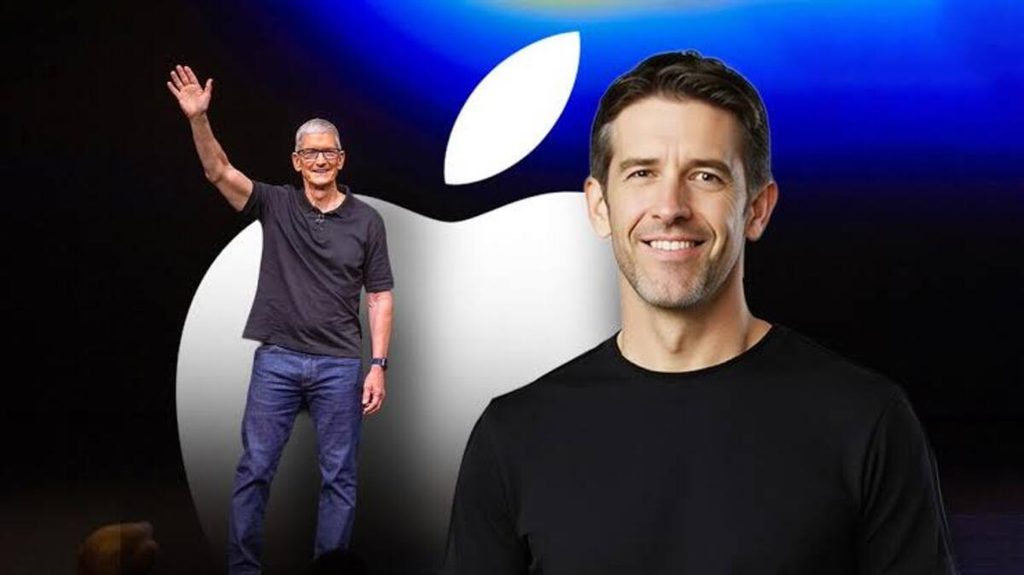
Apple has entered a new leadership era as Tim Cook steps down as Chief Executive Officer after 15 years at the helm, handing the role to John Ternus, the company’s senior vice president of Hardware Engineering.
Cook’s transition took effect on September 1, 2026. He will remain with Apple as Executive Chairman of the Board, while Ternus takes responsibility for the company’s day-to-day leadership.
Cook announced the transition in a message to the Apple community, describing his time as CEO as one of the greatest privileges of his life and expressing excitement about the company’s next chapter.
From operations chief to Apple CEO
Cook joined Apple in 1998 as Senior Vice President for Worldwide Operations and became CEO in 2011, succeeding co-founder Steve Jobs.
Over the next 15 years, he oversaw one of the most significant periods of growth in Apple’s history.
When Cook became CEO, Apple’s market capitalisation was around $350 billion. By 2026, the company had grown to a valuation of about $4 trillion, while annual revenue increased from $108 billion in fiscal 2011 to more than $416 billion in fiscal 2025.
Apple also expanded its presence to more than 200 countries and territories, with its active installed base exceeding 2.5 billion devices.
A broader Apple ecosystem
Cook’s leadership went beyond the iPhone.
Under his tenure, Apple introduced products including the Apple Watch, AirPods and Vision Pro, while expanding services such as Apple Pay, iCloud and Apple TV+.
The company’s services business has since grown into a major revenue engine, generating more than $100 billion annually.
Cook also accelerated Apple’s move toward developing its own chips, strengthened the company’s focus on privacy and accessibility, and made environmental sustainability a more prominent part of its corporate strategy.
John Ternus takes the lead
Ternus now becomes Apple’s CEO at a particularly important moment for the company.
As Senior Vice President of Hardware Engineering, he has been closely involved in the development of several of Apple’s major products and hardware technologies.
His appointment represents a leadership transition, but also a continuation of Apple’s preference for promoting experienced executives from within the company.
Ternus will also join Apple’s board, while Arthur Levinson, who has served as non-executive chairman for 15 years, becomes the board’s lead independent director.
Cook, meanwhile, is expected to remain involved in selected areas, including Apple’s engagement with policymakers around the world.
What comes next for Apple?
Ternus takes over just days before Apple’s annual iPhone event scheduled for September 9.
The timing makes his first weeks as CEO particularly significant, as Apple prepares to introduce its next generation of products and technologies.
The transition also comes as the technology industry undergoes rapid changes around artificial intelligence, hardware innovation and consumer technology.
For Apple, the challenge will be maintaining the scale and financial performance achieved during Cook’s tenure while defining the company’s next phase of innovation under new leadership.
Cook leaves the CEO role after 15 years, but his influence on Apple’s business, products and global expansion is likely to remain visible for years to come.