


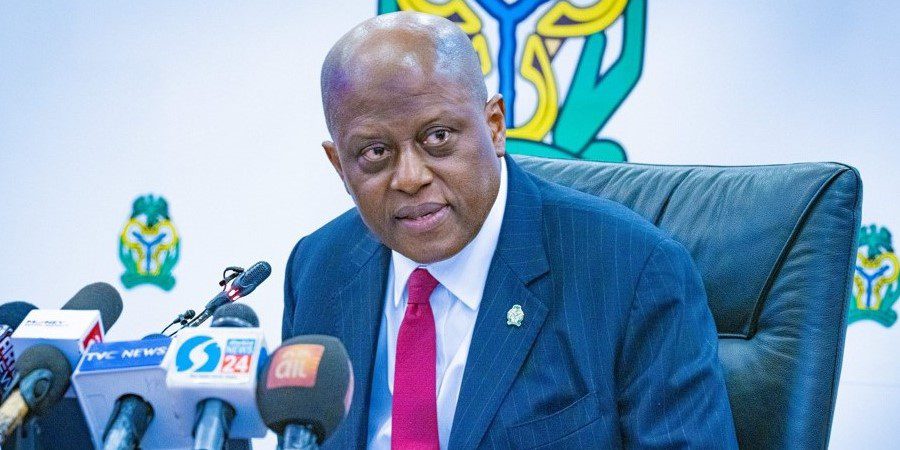
Five years after distancing cryptocurrency from Nigeria’s formal financial system, the Central Bank of Nigeria (CBN) is embracing digital assets as a key pillar of its financial inclusion strategy.
Through its newly unveiled Payments System Vision 2028 (PSV 2028), the apex bank is charting an ambitious course to increase financial inclusion to 95% and bring more than 50 million unbanked and underbanked Nigerians into the formal economy.
At the centre of that strategy are two digital financial instruments once viewed as unlikely allies: the eNaira and regulated stablecoins.
Rather than relying solely on traditional banking infrastructure, the CBN is building what Governor Olayemi Cardoso describes as the “invisible roads” of the digital economy—digital payment rails designed to move money faster, cheaper, and more efficiently across the country.
Repositioning the eNaira for Mass Adoption
When Nigeria launched the eNaira in 2021, it became the first African nation to introduce a Central Bank Digital Currency (CBDC). However, widespread adoption proved challenging as consumers continued to favour existing mobile money and digital payment solutions.
Under PSV 2028, the CBN is taking a different approach.
Instead of competing directly for retail users, the eNaira is being repositioned as the preferred infrastructure for government payments. The strategy involves integrating the CBDC into public-sector disbursements, including salaries, pensions, welfare payments, and social intervention programmes.
By embedding the eNaira into government transactions, the CBN hopes to drive adoption at scale while ensuring that financial services reach underserved communities.
The digital currency’s programmable capabilities also offer a significant advantage. Through smart contracts, funds can be allocated with specific conditions attached, helping to reduce leakages and improve transparency in government spending.
For social intervention programmes, this could mean ensuring that funds are spent only on intended purposes and within designated timeframes.
Stablecoins Move From the Margins to the Mainstream
While the eNaira is expected to strengthen domestic financial inclusion, stablecoins are emerging as a critical component of Nigeria’s cross-border payments strategy.
According to the CBN, Nigeria recorded approximately $92.1 billion in crypto-asset transactions between mid-2024 and mid-2025, with stablecoins accounting for a significant share of that activity.
For many Nigerians, stablecoins have become a practical tool for remittances, freelance earnings, international payments, and treasury management.
Recognising this growing reality, the PSV 2028 framework introduces a structured regulatory approach aimed at bringing stablecoin activity into the formal financial system.
The proposed framework includes licensing requirements for fiat-backed stablecoins and mandates full reserve backing to protect users and maintain confidence in the ecosystem.
The emergence of cNGN, Nigeria’s first regulated stablecoin, is already serving as an early proof of concept. The digital asset has attracted thousands of users and demonstrates growing demand for regulated digital currencies that combine the efficiency of blockchain technology with the stability of fiat currencies.
Reducing the Cost of Cross-Border Payments
One of the most significant objectives of the PSV 2028 strategy is lowering the cost of remittances.
The CBN aims to reduce international transfer costs from the Sub-Saharan African average of 8.78% to a maximum of 5%, making it cheaper for Nigerians abroad to send money home.
By leveraging regulated blockchain infrastructure, the apex bank hopes to bypass many of the intermediaries that currently make cross-border transactions slow and expensive.
The strategy could have substantial implications for Nigeria, one of Africa’s largest recipients of diaspora remittances.
Additionally, the framework proposes that a portion of reserves backing foreign currency-denominated stablecoins be held within Nigeria’s banking system. This could help improve foreign exchange liquidity while increasing regulatory visibility into digital asset activity.
Building a Real-Time Regulatory Framework
Beyond payments and inclusion, the CBN is also modernising how it supervises digital financial markets.
The PSV 2028 roadmap introduces the use of Regulatory Technology (RegTech), enabling real-time monitoring of stablecoin transactions and reserve positions through blockchain-based oversight mechanisms.
This shift would allow regulators to move away from periodic audits toward continuous supervision, aligning Nigeria with emerging regulatory approaches in leading global financial centres.
While the technological foundation of PSV 2028 is ambitious, its success will depend largely on execution.
Millions of financially excluded Nigerians remain constrained by practical challenges such as smartphone affordability, internet access, digital literacy, and transaction costs.
Addressing these barriers will require close collaboration between regulators, banks, fintech companies, telecommunications operators, and government agencies.
The CBN’s strategy represents a notable evolution in policy—from caution around digital assets to actively leveraging them as tools for economic inclusion and financial innovation.
If successfully implemented, PSV 2028 could position Nigeria not only as a leading adopter of digital financial technologies but also as a major contributor to the future of digital finance across Africa.