


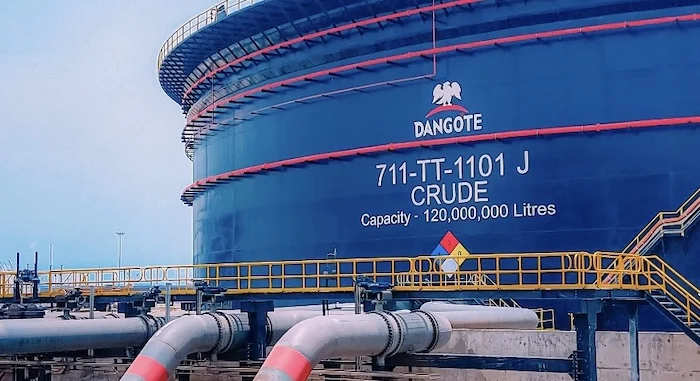
The competition between locally refined petrol and imported fuel in Nigeria has taken a new turn, with the Dangote Petroleum Refinery stopping petrol sales to major marketers that continue to import petroleum products.
A refinery official confirmed the development, saying Dangote would no longer supply marketers who import petrol, citing concerns over the blending of its locally refined products with imported fuel.
The decision escalates a dispute that has been building for months as Nigeria’s downstream petroleum market adjusts to the growing presence of domestic refining capacity.
Why Dangote Is Restricting Sales
According to the refinery, some marketers were allegedly blending petrol supplied by Dangote with imported products before distributing the fuel to consumers.
The refinery is concerned that this could make it difficult to distinguish between its own products and fuel that has been mixed or handled by third parties.
Dangote has also questioned the quality-control process surrounding imported petrol, particularly the ability to independently verify the specifications of imported products before they enter the market.
For the refinery, the issue is therefore not simply about competition. It is also about protecting the quality associated with its products and its investment in domestic refining.
A Bigger Fight Over Nigeria’s Fuel Market
The development comes at a time when Nigeria is attempting to reduce its historical dependence on imported refined petroleum products.
Dangote Refinery, with a capacity of 700,000 barrels per day, has become a major player in the domestic and international refined-products market. Yet imported petrol continues to account for a significant share of supply.
Market data cited by the refinery showed that imported petrol represented about 43 percent of fuel supplied into Nigeria in July.
That creates a complicated business environment.
On one hand, continued imports give marketers another source of supply and can provide competition in the market. On the other, persistent imports could reduce demand for locally refined products and make it harder for domestic refineries to fully capture the Nigerian market.
Marketers Push Back
The move has not gone unchallenged.
Petroleum marketers have accused Dangote of attempting to restrict fuel imports, arguing that the refinery should not determine whether marketers can source products from other suppliers.
Some marketers have also maintained that imports remain important for ensuring adequate supply when domestic production is insufficient.
The Independent Petroleum Marketers Association of Nigeria has taken a more flexible position, with its representatives saying marketers generally seek the most competitive source of petrol, whether from domestic refineries or importers.
This places the regulator, marketers and domestic refiners at the centre of a much larger question: How should Nigeria balance local refining, market competition and fuel supply security?
What It Means for Businesses
Dangote’s decision could reshape relationships across Nigeria’s downstream petroleum sector.
Marketers that do not import petrol may gain greater access to Dangote’s locally refined products, while companies that continue importing could become more dependent on international supplies.
It could also intensify competition between domestic and imported petrol, particularly as businesses continue to deal with fluctuations in crude oil prices, foreign exchange and logistics costs.
For consumers, the bigger question is whether the development will ultimately translate into more stable prices and reliable supply.
For Nigeria, however, the implications extend beyond the price at the pump.
The country has spent years dealing with the economic consequences of importing large volumes of refined petroleum products. A stronger domestic refining industry could reduce exposure to international supply disruptions and foreign-exchange pressures—but only if local production can compete effectively and supply the market consistently.
The Bigger Picture
Dangote’s latest move highlights a fundamental transition taking place in Nigeria’s energy industry.
The country is moving from an era dominated by fuel imports towards a market where large-scale domestic refining is increasingly capable of meeting demand.
That transition will not be without friction.
Refiners want a market that rewards domestic production. Marketers want flexibility to source fuel competitively. Regulators must balance both interests while protecting consumers and maintaining adequate supply.
How that balance is managed could determine the next chapter of Nigeria’s downstream petroleum industry.
For Dangote Refinery, the decision is a push to protect its position in a market it was built to transform.
For fuel marketers, it is another reminder that Nigeria’s petroleum business is changing—and the old rules of the market may no longer apply.