
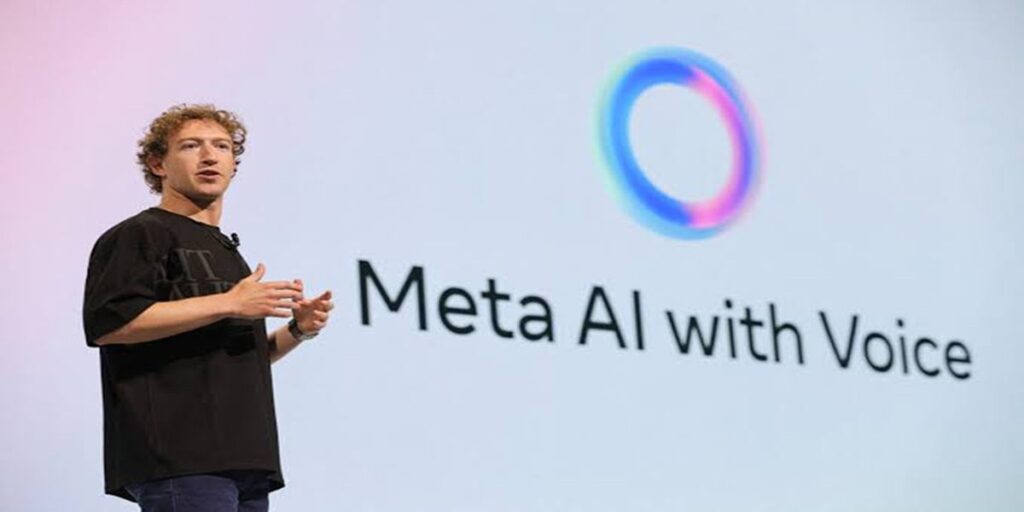
Meta is positioning its next major AI push as something bigger than another chatbot feature: personal superintelligence that could become an everyday business and productivity tool for billions of people.
In a statement released on Monday, Meta CEO Mark Zuckerberg said the company wants to make personal superintelligence available to everyone for free, while offering paying users access to additional computing power and more advanced capabilities.
The vision could significantly change how individuals and businesses interact with AI.
Instead of simply answering questions, Meta wants its AI to understand a user’s goals and provide personalised support across areas such as business, careers, education, finance and everyday decision-making.
“AI should be widely available and not just in the hands of a few companies or governments,” Zuckerberg said.
Meta is turning AI into an infrastructure play
For Business Verge, the more interesting part of Meta’s announcement is not the phrase “superintelligence.” It is the distribution strategy behind it.
Meta already has more than three billion monthly users across Facebook, Instagram, WhatsApp and Messenger. That gives the company an enormous existing audience through which it can distribute AI services.
Rather than asking users to download another AI application, Meta can potentially place increasingly powerful AI capabilities inside products they already use.
For businesses, this could create a new channel for customer engagement, sales, marketing and productivity.
An entrepreneur could use an AI agent to analyse a business idea, develop a marketing strategy or manage routine tasks. A small business could potentially access capabilities that previously required consultants, analysts or specialised employees.
That makes Meta’s AI strategy a business infrastructure play as much as a technology strategy.
The competition is moving beyond chatbots
Meta is entering a market where companies such as OpenAI, Google and Anthropic are already competing to make AI more useful, personalised and capable of completing tasks on behalf of users.
The next stage of competition may therefore not be about who has the smartest chatbot, but who becomes the AI layer through which people work, communicate, shop and make decisions.
Meta has one major advantage: distribution.
Its AI can potentially reach users through platforms they already spend hours on every day.
Free AI could reshape access to business expertise
Zuckerberg’s vision also has implications for Africa and other emerging markets where access to specialised professional services can be expensive or limited.
If advanced AI becomes widely available at little or no cost, entrepreneurs could gain access to tools for research, business planning, content creation, customer support and other functions without needing to immediately hire large teams.
However, the biggest challenge may be trust.
The more useful these AI agents become, the more personal information users will need to share with them. Meta will therefore have to convince users that their financial, health, career and business information can be handled responsibly.
For businesses, the opportunity is significant. But so is the question of whether customers will trust an AI agent enough to let it participate in important decisions.
Meta is betting that personal AI will become as fundamental as the social platforms it built its global business around. If that bet succeeds, the competition for the future of AI may be fought not just over models, but over who owns the relationship between people and their digital lives.