

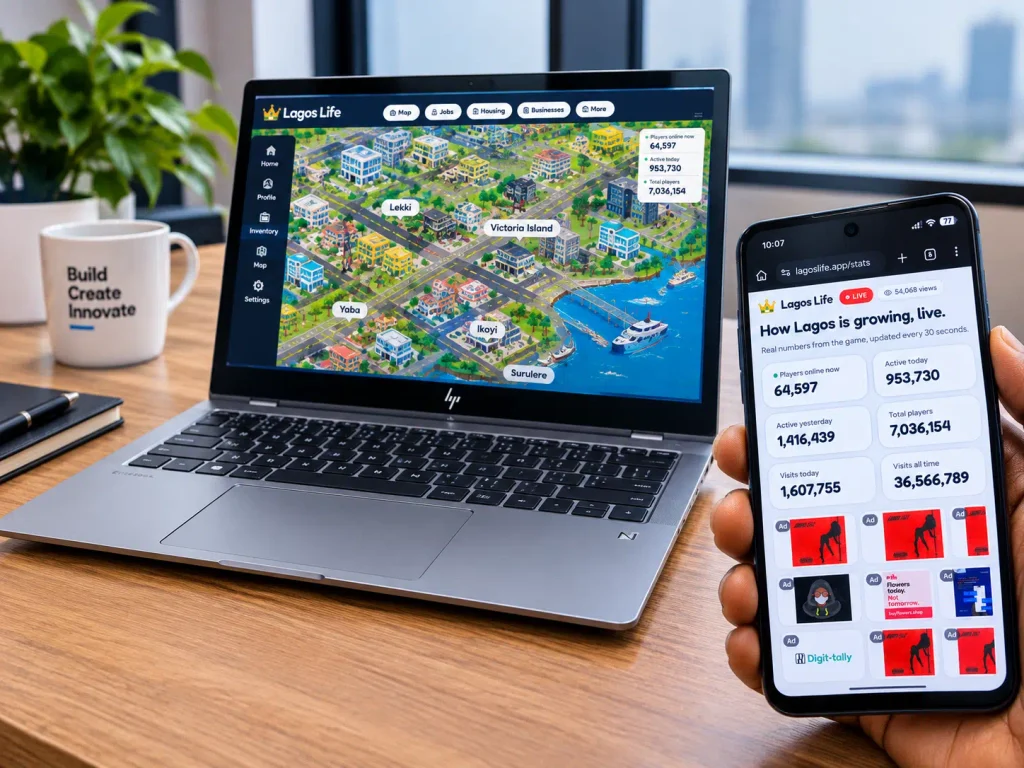
Lagos Life, a Nigerian browser-based life simulation game, says it has attracted more than 7 million players in just 10 days, as its creator, Shalom Rayhamen, plans to open the platform to third-party developers through application programming interfaces (APIs).
Rayhamen announced the milestone on X, reporting more than 1.4 million active players in a single day and over 36.5 million visits since the game launched on October 1, 2026.
The rapid growth builds on the game’s early momentum, having crossed one million players within its first three days. Its virtual recreation of everyday life in Lagos has attracted users who can create characters, find jobs, earn virtual money, rent homes and interact with others in a shared digital city.
However, the next phase of Lagos Life could extend beyond gaming, potentially turning it into a platform where other developers can build and distribute their own experiences.
Lagos Life plans to open its platform to developers
Rayhamen says the team plans to release APIs that will allow independent developers to integrate their games into Lagos Life.
APIs enable different software systems to communicate. For developers, the proposed integration could provide access to Lagos Life’s existing user base without requiring them to build an entirely separate account system and audience from scratch.
Players would be able to access participating games using their existing Lagos Life accounts and spend their in-game currency across those experiences.
If successfully implemented, the model could transform Lagos Life from a standalone game into a broader digital platform, with third-party developers contributing new experiences and potentially increasing user engagement.
However, important details remain unclear, including the API launch date, developer access requirements, revenue-sharing arrangements and how transactions involving the game’s virtual currency will work.
These details will be critical to attracting developers and establishing a sustainable ecosystem around the platform.
From viral game to a growing business
Lagos Life’s rapid adoption has also attracted attention to its commercial potential. The game reportedly raised $500,000 in seed funding at a $10 million valuation, according to earlier reporting by Techpoint Africa.
Opening the platform to external developers could create additional opportunities for growth by expanding the range of experiences available to users. It could also encourage players to spend more time within the ecosystem, rather than treating Lagos Life as a single game.
Still, a large player count does not automatically translate into sustainable revenue. The company’s long-term prospects will depend on retaining users, creating value for developers and establishing a business model that can support the platform as it grows.
A Nigerian developer’s journey draws attention
The story has also highlighted the role of Nigeria’s developer-training ecosystem.
Chibueze Ukaegbu, CEO of LearnFactory, said Rayhamen began her technology journey at the Aba-based training centre, describing her success as a proud moment for the organisation.
The development drew further attention when Flutterwave CEO Olugbenga Agboola responded to Ukaegbu’s post on X by asking how he could support LearnFactory’s work.
The connection has brought fresh visibility to a training centre operating outside Nigeria’s major technology hubs and highlighted how developers emerging from these communities can build products with international reach.
As Lagos Life moves towards its next stage, its challenge will be to turn its early popularity into a lasting platform for players, developers and the business itself.