

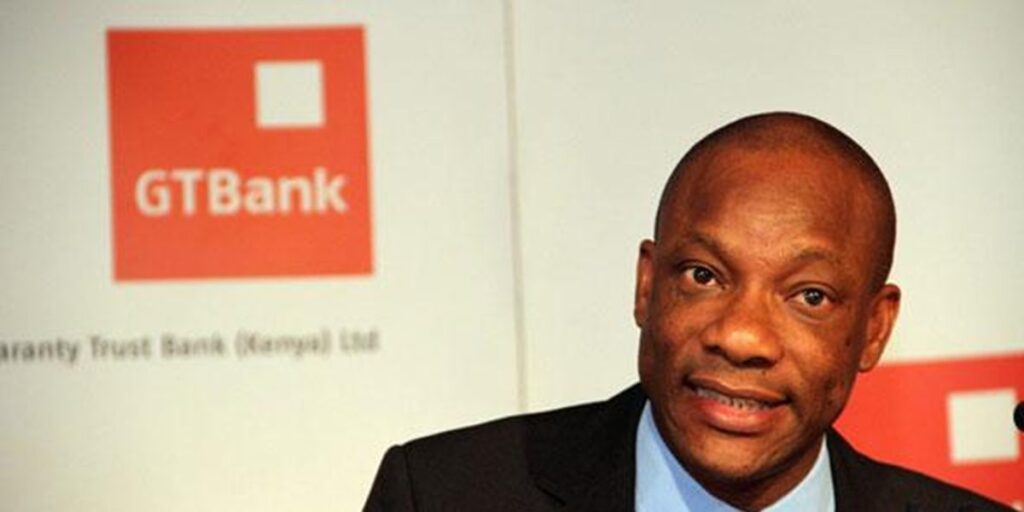
A video of Guaranty Trust Holding Company (GTCO) Group CEO Segun Agbaje challenging Nigeria’s leading fintech companies to publish their financial results has resurfaced online, reigniting conversations around transparency, profitability and accountability in the country’s fintech sector.
Originally made during GTCO’s 2024 Facts Behind the Offer presentation, Agbaje questioned why many of Nigeria’s biggest fintechs remain private about their financial performance despite their rapid growth and multi-billion-dollar valuations.
His comments have gained renewed attention as GTCO’s fintech subsidiary, HabariPay, continues to post strong financial results.
According to the company’s latest financial disclosures, HabariPay recorded a profit before tax of ₦4.02 billion in the first half of 2025, representing a 95% year-on-year increase from ₦2.07 billion recorded during the same period in 2024.
The subsidiary also grew its operating income by 82% to ₦5.05 billion, driven by increased transaction volumes and wider adoption of its digital payment solutions among businesses and consumers.
HabariPay currently operates across payment switching, merchant acquiring and value-added payment services, with GTCO noting that each business segment continues to expand steadily.
The renewed attention on Agbaje’s comments also highlights a broader conversation about financial transparency within Nigeria’s fintech ecosystem.
While major fintechs such as OPay and Moniepoint have attracted significant venture capital investments and built large customer bases, most privately held fintech companies do not publicly disclose quarterly financial results, leaving profitability and operational performance largely unknown outside their investor circles.
GTCO, by contrast, continues to publish audited quarterly reports, positioning HabariPay as one of the few fintech businesses in Nigeria whose financial performance can be independently assessed.
As Nigeria’s digital payments industry continues to mature, the debate around balancing rapid growth with financial transparency is expected to remain a key issue for investors, regulators and the broader technology ecosystem.