

Foreign investment in Nigeria’s technology sector is moving beyond payments and financial services, with defence technology, autonomous systems and critical infrastructure emerging as new areas of investor interest.
One example is Terra Industries, a Nigerian defence-tech startup that raised an additional $22 million in a seed extension in February 2026. Led by US investment firm Lux Capital, the round brought the company’s total funding to $34 million and included backing from 8VC and Resilience17, the investment firm led by Flutterwave CEO Olugbenga Agboola.
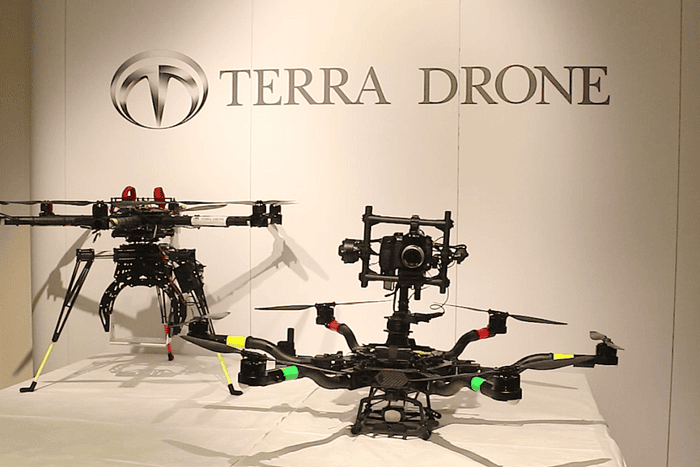
Founded in 2024 by Nathan Nwachuku and Maxwell Maduka, Terra develops drones and autonomous security systems designed to protect critical infrastructure. Its funding reflects the growing interest of international investors in technology businesses addressing security and infrastructure challenges, rather than focusing exclusively on consumer-facing fintech products.
The shift raises a broader question about Nigeria’s startup ecosystem: as foreign capital spreads across more sectors, how can local investors play a stronger role in financing the country’s next generation of technology companies?
The foreign capital behind Nigeria’s fintech boom
International investment has played a significant role in building some of Nigeria’s most prominent technology companies.
In February 2022, Flutterwave raised $250 million in a Series D funding round led by B Capital Group, with participation from investors including Alta Park Capital, Whale Rock Capital and Lux Capital. The round valued the payments company at more than $3 billion.
Paystack followed a different path. After receiving investment from Stripe in 2018, the Nigerian payments startup was acquired by the US payments company in 2020.
The two examples illustrate different ways foreign capital can support local technology businesses. Venture investment can provide funds for expansion while allowing a company to remain independently operated, depending on the deal structure. An acquisition, by contrast, transfers ownership to the acquiring company.
Neither arrangement automatically diminishes a company’s Nigerian origins. International investors can provide access to larger pools of capital, global networks and expertise in scaling businesses across markets.
However, the dominance of foreign funding also raises questions about the depth of Nigeria’s domestic investment market and the options available to founders seeking capital.
Nigeria’s funding market faces pressure
Despite remaining one of Africa’s major startup hubs, Nigeria’s technology sector has faced a more challenging fundraising environment.
According to Partech’s 2025 Africa Tech Venture Capital report, Nigerian startups attracted $412 million across 83 deals in 2025. The figures represented a 21% decline in funding and a 19% drop in deal count compared with 2024.
The figures suggest that founders are operating in a more selective investment market, where securing capital can depend heavily on a company’s sector, traction, business model and ability to demonstrate a path to sustainable growth.
Equity funding is not the only source of capital available to startups, as businesses can also explore debt financing and other funding structures. Nevertheless, companies that are too early-stage or risky for conventional lending may have fewer alternatives when equity investment slows.
Flutterwave CEO Agboola has also emphasised the importance of African investors understanding local markets. In a 2025 interview with African Business, he highlighted the need for more African capital to support technology companies on the continent, while acknowledging that founders cannot simply reject international investment when they need funding to grow.
African investors are gaining ground
There are signs that African capital could play a larger role in the continent’s venture ecosystem.
Data from the African Private Capital Association indicates that African investors accounted for 45% of venture-fund commitments in 2025, up from an average of 23% between 2022 and 2024.
However, these figures cover Africa broadly rather than Nigeria alone, and commitments to funds do not necessarily translate into capital immediately invested in startups.
The trend nonetheless points to an opportunity to strengthen regional investment networks and increase the pool of capital available to African businesses.
For Nigerian founders, a deeper local investor base could provide more financing options and potentially improve access to investors who understand domestic market conditions. Building that capacity will require more than capital commitments; it will also depend on investors’ ability to deploy funds, manage risk and support companies through different stages of growth.
Why Terra Industries signals a wider shift
Terra’s funding round illustrates how international and African investors can participate in the same company, bringing different networks and investment perspectives.
The startup operates in defence technology and critical infrastructure protection, areas that connect software, hardware, security and industrial development. Its focus on drones and autonomous systems also places it in a segment that differs considerably from the payment-processing businesses that helped define Nigeria’s earlier technology investment boom.
The participation of investors such as Lux Capital and 8VC, alongside Resilience17, signals interest in technology designed to address complex infrastructure and security challenges.
Still, a funding announcement does not reveal the full terms of an investment or establish how much influence individual investors have over a company. Those questions are particularly important for businesses developing technology connected to national security and critical infrastructure.
Building a more balanced funding ecosystem
Foreign investment remains important to the growth of Nigerian technology companies, particularly those operating in capital-intensive sectors that require significant resources to develop products and expand internationally.
But a resilient startup ecosystem needs a broader range of funding sources. Domestic investors, regional venture funds, institutional capital and development finance can help give founders more options and reduce dependence on a narrow pool of overseas backers.
The emerging story is not that foreign investment is leaving Nigerian fintech behind. It is that international capital is exploring a wider range of opportunities, from payments to defence technology and infrastructure.
The long-term opportunity for Nigeria is to ensure that this growth is matched by a stronger local investment ecosystem capable of backing ambitious businesses across sectors.
As companies such as Flutterwave and Terra Industries attract global attention, the bigger measure of progress will be whether Nigerian businesses can access the right capital, retain meaningful strategic flexibility and build lasting value within the economy.