

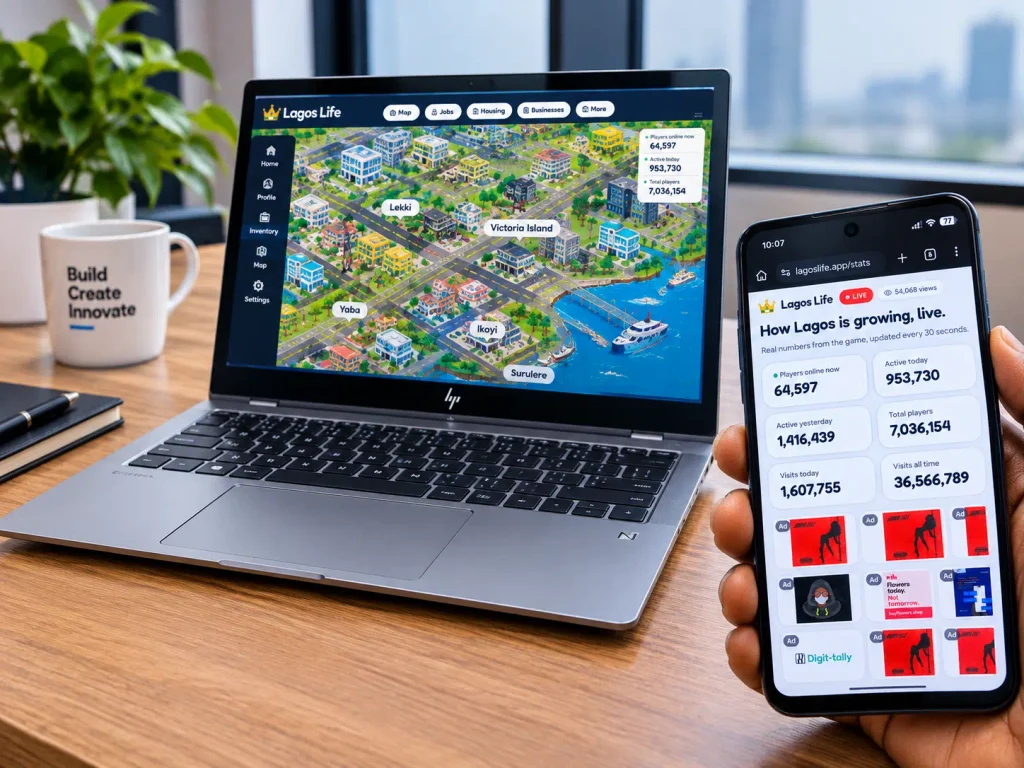
Shalom Rayhamen, founder and CEO of Lagos Life, is showing what can happen when creativity, artificial intelligence and the right market opportunity come together.
Before Lagos Life, Rayhamen had reportedly built more than five products, but none achieved the same level of traction.
Then came Lagos Life.
According to the figures shared in the post, within 11 days of launch, the game had attracted more than 10 million unique website visitors, secured $500,000 in pre-seed funding at a $10 million valuation, and generated over $150,000 in revenue from in-game spending, advertising and brand partnerships.
What makes the story even more interesting is the reported role of AI in building the product. Rayhamen reportedly used Claude AI to build Lagos Life in a single night.
That is a striking example of how AI tools can help people move from an idea to a working product faster than traditional development processes might allow.
The bigger lesson goes beyond AI
Lagos Life’s growth is exciting, but the lesson is not simply that AI can build products quickly.
It is also about persistence.
Building more than five products before finding one that gains significant traction is a reminder that success does not always come with the first idea. Sometimes, the experience gained from previous attempts prepares you for the one that finally connects with the market.
AI can reduce some technical barriers, speed up experimentation and help more people participate in building technology. But identifying a real problem, understanding users and creating something people want to keep using still matter.
You may not need to become a software engineer, but learning how to use the tools available to you can open doors you never considered.
The world is changing quickly, and yesterday’s knowledge may not be enough for tomorrow’s opportunities.
As we prepare for 2027, the question is simple: What skill are you learning today that could change what you are capable of building tomorrow?