

The Federal Government has begun efforts to establish a harmonised regulatory framework for internet platforms, online intermediaries, and other cross-cutting digital economy issues, in a move aimed at eliminating regulatory overlaps and providing greater clarity for businesses and investors.
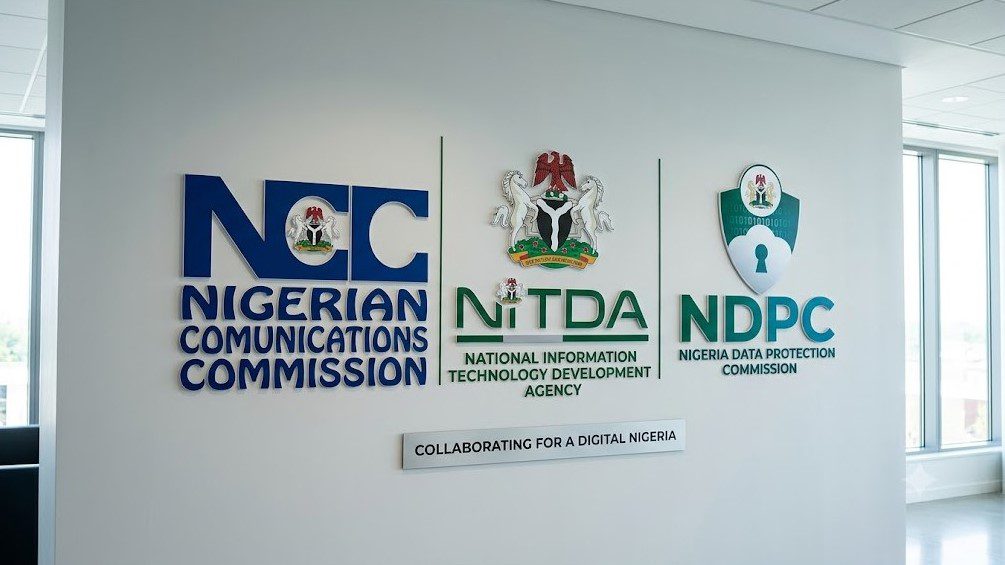
According to a statement from the Federal Ministry of Communications, Innovation and Digital Economy (FMCIDE), the initiative was discussed during a joint meeting chaired by the Minister, Dr. Bosun Tijani, with the leadership of the Nigerian Communications Commission (NCC), the National Information Technology Development Agency (NITDA), and the Nigeria Data Protection Commission (NDPC).
Pending the development of a unified governance framework, the ministry has directed the three agencies to maintain the current regulatory status quo.
Agencies to Pause New Digital Regulations
Under the directive, the NCC, NITDA, and NDPC will continue enforcing existing laws, regulations, and guidelines within their statutory mandates but will suspend the implementation of any recently introduced frameworks covering internet platforms, online intermediaries, and other overlapping digital economy issues.
The move is intended to prevent conflicting regulatory requirements that often create compliance challenges for technology companies, digital platforms, and investors operating in Nigeria.
By aligning regulatory responsibilities, the government hopes to create a more predictable business environment while ensuring institutions speak with one coordinated policy direction.
Supporting Nigeria’s Digital Economy Ambitions
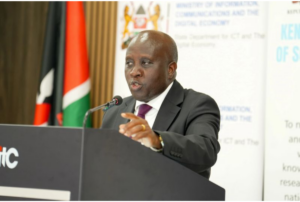
Speaking on the initiative, Dr. Bosun Tijani said regulatory coordination has become increasingly important as telecommunications, digital platforms, artificial intelligence, cybersecurity, and online safety continue to converge.
He noted that a unified regulatory approach is essential for strengthening investor confidence, encouraging innovation, and providing legal certainty for businesses operating in Nigeria’s digital economy.
The initiative also aligns with the Federal Government’s broader ambition of growing Nigeria’s digital economy contribution toward a $1 trillion economy by 2030, with technology expected to play a central role in achieving that target.
A Joint Committee to Develop National Policy
To drive the harmonisation process, the ministry has established a joint committee comprising representatives from the NCC, NITDA, and NDPC.
The committee will coordinate technical discussions, engage industry stakeholders, academia, and relevant institutions, and develop recommendations for a national digital governance framework that clearly defines institutional responsibilities.
According to the ministry, the objective is not to reduce the statutory powers of any agency but to eliminate unnecessary duplication while promoting a more coordinated regulatory environment.
Existing regulations that fall squarely within the legal mandates of each agency will remain operational until the harmonised framework is completed.
Nigeria’s digital ecosystem has expanded rapidly in recent years, with increasing activity across fintech, artificial intelligence, digital platforms, cloud computing, and online services.
As regulatory responsibilities continue to overlap, businesses have raised concerns about navigating multiple compliance requirements from different government agencies.
The government’s latest move seeks to address those concerns by creating a unified policy structure capable of supporting innovation while maintaining consumer protection, data privacy, and fair competition.
The initiative also comes as regulators intensify oversight of major global technology companies operating in Nigeria, including investigations into the activities of Meta, Alphabet, X, and several generative AI firms over concerns relating to competition and the use of local digital content.
If successfully implemented, the harmonised framework could provide a more consistent regulatory environment while strengthening Nigeria’s position as one of Africa’s leading digital economies.