


Every year, the Financial Times and Statista screen thousands of African companies for one thing: who is actually compounding revenue the fastest. The 2026 edition, now in its fifth year, set the bar at a minimum compound annual revenue growth rate of 9.27% between 2021 and 2024, with companies needing at least $100,000 in 2021 revenue and at least $1.5 million by 2024 to qualify. Out of thousands of companies evaluated, 130 made the final list, and at the very top of it sits a genuine first: an Egyptian company leading the ranking for the first time in its history.
That alone tells you something has shifted. For four years running, this list has been a story about Nigeria, South Africa, and Kenya jostling for position. This year, Nigeria’s naira devaluation which began under the Tinubu administration in May 2023 quietly worked against Nigerian companies throughout the entire measurement window, since the ranking converts everything into dollars. A business growing 80% in naira terms could show up flat, or worse, once that growth got converted at a steadily weakening exchange rate. The result: Nigeria dropped from 28 companies on last year’s list to just 16 this year, losing second place in country representation to Kenya for the first time since the ranking began. South Africa, unaffected by any of this currency turbulence, never lost its grip at the top, holding 51 of the 130 total spots.
Here’s who actually made the top 20, and what got them there.
1. Thndr — Egypt Founded in 2020, Thndr built its business on a bet that Egypt’s retail investing culture almost nonexistent a decade ago would go mobile before it went anywhere else. The platform offers stocks, gold, mutual funds, savings products, and built-in financial education. That bet paid off: Thndr now accounts for 82% of new investors on the Egyptian Exchange and holds 11% of the country’s total retail trading volume. Revenue climbed from $0.12 million in 2021 to $8.02 million in 2024, a CAGR of 311.17%, the steepest climb on the entire list, and enough to make Thndr the first Egyptian company ever to top this ranking.
2. Sabi — Nigeria Founded in 2021 by Anu Adedoyin Adasolum and Ademola Adesina, Sabi began as a spinout from power-distribution venture Rensource before pivoting into B2B digital commerce for informal retailers, helping them digitise inventory, financing, and supplier relationships. In 2025 the company expanded into TRACE, a new line managing mineral and agricultural commodity trading, which is almost certainly why the FT/Statista table classifies Sabi under Metals & Mining rather than e-commerce, a quirk that understates how broad its actual footprint has become. Revenue grew from $1.52 million to $46.50 million, a roughly 30-fold increase and one of the largest absolute jumps on the list.

3. Regulus — Ghana Founded in November 2019, Regulus built fintech infrastructure spanning cross-border payments, FX brokerage, and investment access across Ghana, Nigeria, and Mauritius, an unusually wide footprint for a company this young. A crowdfunding platform is reportedly in development, suggesting Regulus sees itself as a multi-product financial platform rather than a single-service play.

4. Haul247 — Nigeria Founded in 2020 by Sehinde Afolayan, Haul247 set out to digitise one of Nigeria’s most stubbornly analogue industries: freight trucking. The platform connects manufacturers and cargo owners directly with truck operators, cutting through layers of informal brokering that have long made logistics costs unpredictable. It raised $3 million in seed funding in 2023, and revenue grew from $0.10 million to $1.93 million, a smaller base than most companies here, but a near-20-fold increase that signals real traction in a notoriously hard sector to digitise.
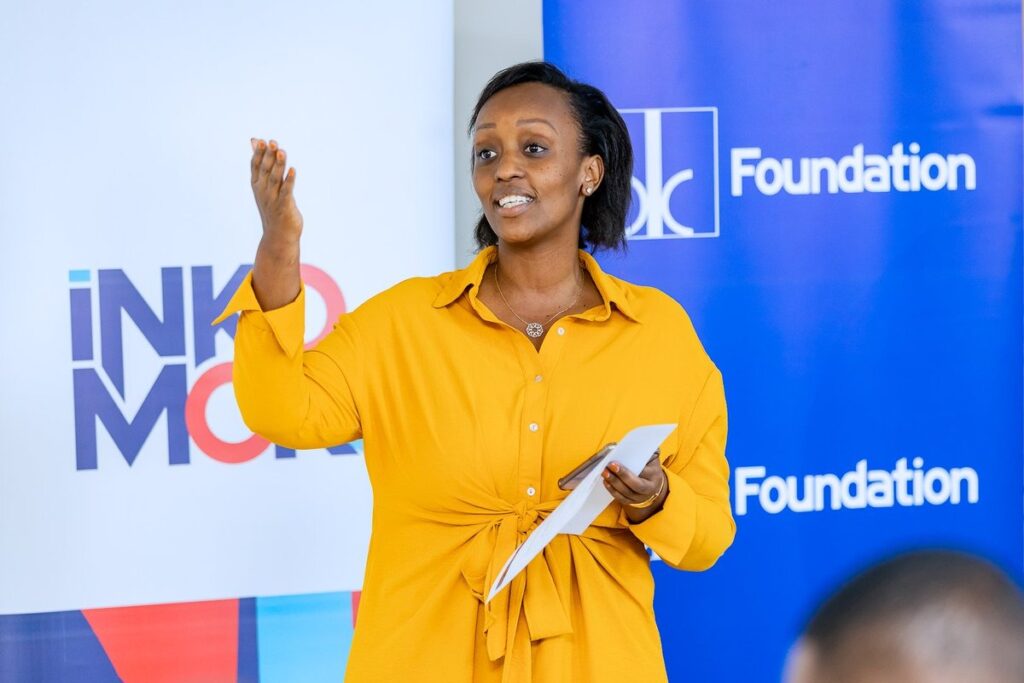
5. Inkomoko — Rwanda Founded in 2012 as African Entrepreneur Collective by Sara Leedom and Julienne Oyler, Inkomoko is the rare name on this list that isn’t a startup chasing venture scale, but a social enterprise built around a specific underserved population: refugee and displaced entrepreneurs. It now operates across Rwanda, Kenya, Ethiopia, South Sudan, and Chad, and had distributed over $24 million in financing to more than 100,000 entrepreneurs by 2025, making it Africa’s largest lender to refugee-owned businesses. Its place in the top five is a reminder that “fastest-growing” doesn’t only mean venture-backed tech.

6. Fieldbar — South Africa Founded in 2018 by Lee Hartman and Corban Warrington, Fieldbar took an unglamorous product, the cooler box and rebuilt it as a luxury good, drawing on South Africa’s safari heritage for branding and design. The Cape Town-based company is now stocked at Harrods and other high-end retailers internationally, and it topped News24 Business’ own fastest-growing companies list in April 2026, reporting roughly 1,600% growth and R134 million in revenue for 2024. Proof that manufacturing and consumer goods can still post tech-startup-style growth curves when branding and distribution are right.

7. Heirs Life — Nigeria Founded in 2020 as part of Tony Elumelu’s Heirs Holdings group, Heirs Life is a life insurer that posted a CAGR of nearly 148%, one of the standout growth rates in the fintech and insurance cluster. Its performance signals that Nigeria’s largest conglomerates are treating insurance as a growth vehicle, not just a defensive product line, in a market historically underpenetrated by formal insurance.

8. Remedial Health — Nigeria Founded in 2021 by Samuel Okwuada and Victor Benjamin, Remedial Health tackled a problem with real public health stakes: counterfeit and poorly tracked medicine moving through Nigeria’s pharmaceutical supply chain. The platform lets pharmacies order verified drugs directly from manufacturers, cutting out the informal middlemen layer where counterfeiting risk is highest. It raised $12 million in Series A funding in 2023, and revenue grew from $0.84 million to $12.53 million, growth that carries a direct public-health upside alongside the commercial one.

9. Future Forex — South Africa Founded in 2020 by Harry Scherzer and Josh Kotlowitz, Future Forex combines conventional cross-border payments and FX services with crypto asset arbitrage and trading, a hybrid model that lets it capture both traditional remittance flows and the more speculative crypto-trading crowd. Revenue grew from $0.66 million to $7.77 million.

10. Beachcomber Resorts & Hotels — Mauritius Founded in 1952 as New Mauritius Hotels Ltd, Beachcomber is the oldest and largest hotel group in Mauritius and the clearest outlier on this list: a 70-plus-year-old hospitality incumbent sitting among startups less than a decade old. It owns and manages eight hotels in Mauritius, plus one each in the Seychelles and Morocco, alongside in-flight catering and tour operations. Consolidated revenue reached roughly $368 million for the fiscal year ended June 2025, up 9.6% year on year, proof that mature companies riding a tourism recovery can post real growth too, not just disruptive new entrants.

11. Africhange — Nigeria Founded in 2020, Africhange is built around a specific insight: that diaspora remittance corridors, not domestic transactions, are where the real growth sits. It operates the Nigeria-UK-Canada-Australia corridor and is expanding into crypto payment rails, targeting diaspora customers who want speed and low fees more than a traditional bank relationship. Revenue grew from $0.22 million to $2.30 million.
12. Rank Capital — Nigeria Formerly known as Moni and backed by Y Combinator, Rank Capital is pursuing community banking through acquisition rather than pure organic growth, having acquired both AjoMoney and Zazzau Microfinance Bank in 2025. It has disbursed nearly $46.62 million in loans with a striking 96% repayment rate, a figure that stands out given how often consumer lending in emerging markets struggles with default.
13. General Printers 2021 — Kenya The highest-ranked Kenyan company on the list, General Printers 2021 operates in commercial printing and manufacturing. Detailed public information is limited, but its position as Kenya’s top entrant, ahead of better-known Kenyan fintech and energy names, suggests Kenya’s growth story isn’t confined to the sectors that usually get the attention.
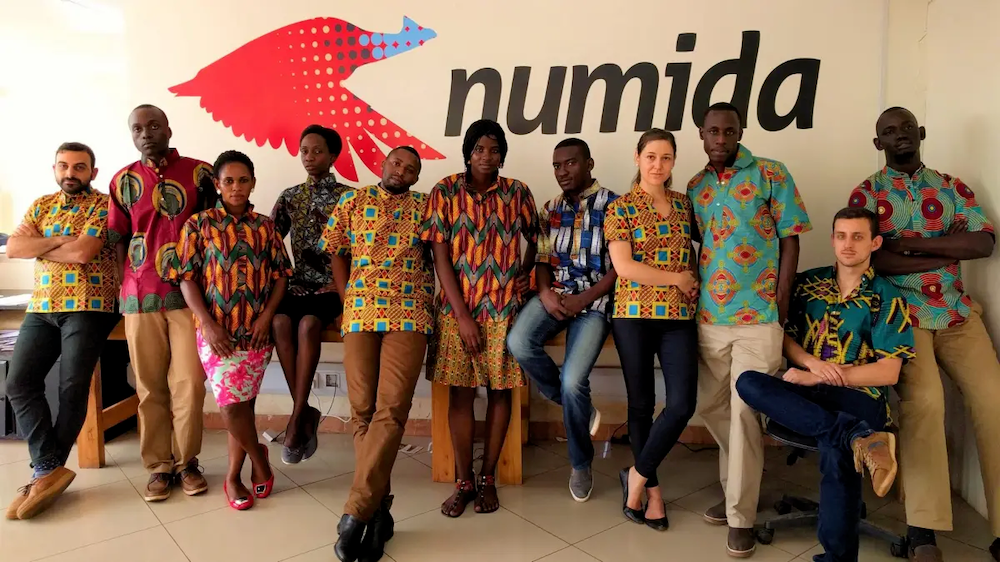
14. Numida — Uganda Founded in 2017 by Mina Shahid, Catherine Denis, and Ben Best, and backed by Y Combinator, Numida built a digital lending platform offering unsecured business loans through a mobile app, targeting Uganda’s vast population of micro and small businesses that traditional banks won’t touch. It has provided more than $20 million in working capital to roughly 27,000 businesses, one of the more proven micro-lending models on the continent.

15. Comercio Partners — Nigeria Founded in 2016 and based in Lagos, Comercio Partners is an investment bank advising on equity and debt capital markets, M&A, restructuring, and recapitalisation, alongside asset management and real estate advisory. Its presence on a list otherwise dominated by consumer fintech and logistics startups is a reminder that Nigeria’s institutional finance side is compounding quickly too, even if it draws less press attention than the consumer apps.
16. Altacon Projects — South Africa Founded in 2015 by Altaaf Essop and based in Durban, Altacon is a construction and civil engineering firm independently recognised as Africa’s fastest-growing construction company for 2025. It also serves as the official infrastructure partner of the Gift of the Givers disaster-response foundation, a public-good dimension that’s rare among construction firms its size.

17. McNichols — Nigeria Founded in 2004 and based in Lagos/Ogun State, McNichols is an indigenous FMCG manufacturer producing choco drinks, custard, sugar, pancake mixes, milk, and bitter leaf tea, listed on the Nigerian Exchange. Its appearance on this list, two decades after founding, shows that legacy consumer goods manufacturers can still post startup-grade growth when they find the right product mix for the local market.

18. Termii — Nigeria Founded in 2017 by Emmanuel Gbolade, Ayomide Awe, and Atinuke Idowu, Termii built communications infrastructure letting African businesses reach customers via SMS, voice, and email at scale and has processed more than 1 billion transactions to date. It’s effectively the unglamorous plumbing behind a huge share of customer-facing African fintech and e-commerce, most consumers have likely interacted with Termii’s infrastructure without ever knowing the name.
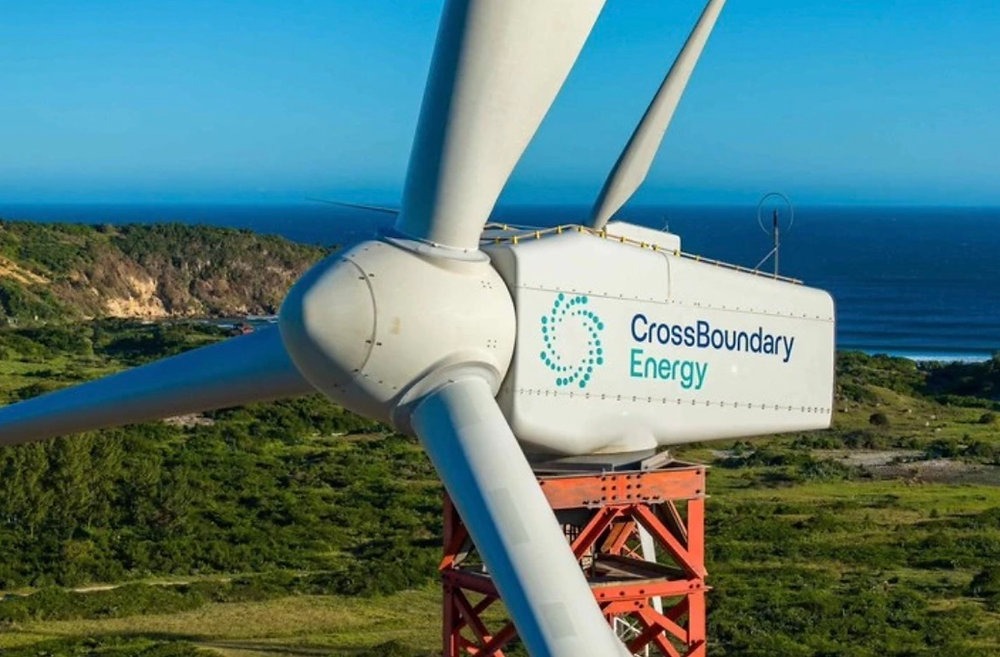
19. CrossBoundary Energy — Mauritius Founded in 2015 and incorporated in Mauritius, CrossBoundary Energy runs an energy-as-a-service model, owning, financing, and operating solar, wind, and battery storage systems for commercial and industrial clients across roughly 20 African countries. As of June 2025 its awarded portfolio spanned $707 million across 560 MW of capacity scale, which puts it closer to an infrastructure fund than a typical growth startup, and underscores how much capital is now flowing into distributed energy as a structural fix for Africa’s grid gaps.
20. Paymenow — South Africa Founded in 2019, Paymenow gives low-income workers access to a portion of earned wages before payday, partnering directly with employers to reduce reliance on expensive short-term credit and payday lenders. Revenue surged from $1.23 million to $7.28 million, growth driven largely by employer adoption rather than direct-to-consumer marketing, a quietly durable distribution model on the continent.
While rankings offer a snapshot of growth, the real story lies in how these companies got there. Behind every valuation milestone, market expansion, and funding round is a unique journey of innovation, resilience, and strategic execution.
In our next feature, Business Verge will take an in-depth look at the top five companies on this list exploring the founders behind them, the challenges they overcame, the business models driving their success, and what their rise reveals about the future of African enterprise. Their stories are not just about growth; they are a window into the forces reshaping the continent’s economy.