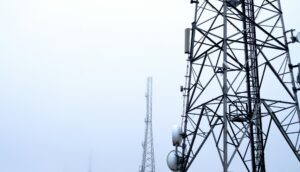


MTN Group is ramping up its next phase of digital infrastructure expansion in South Africa with a R480 million investment aimed at boosting 5G and broadband connectivity across the Free State and Northern Cape provinces.
The investment comes as telecom operators across Africa race to strengthen network capacity amid rising demand for streaming, mobile banking, remote work, cloud services, AI-driven applications, and digital commerce. While South Africa remains one of Africa’s most advanced telecom markets, network access gaps still exist between major urban centres and underserved communities.
According to the company, R300 million will be invested in the Free State, while over R180 million will go toward expanding and modernising network infrastructure in the Northern Cape. The rollout will improve both 4G reliability and 5G availability across key towns and rural areas including Welkom, Bethlehem, Phuthaditjhaba, Kimberley, Upington, Kuruman, and De Aar.
The move forms part of MTN South Africa’s broader strategy to increase population coverage, improve network quality, and support digital inclusion initiatives across the country. The company is targeting approximately 82% 5G coverage in the Free State and 75% in the Northern Cape by 2026, positioning the rollout as both a commercial and economic development initiative.
The expansion also reflects growing competition within South Africa’s telecom sector, where operators are investing heavily in spectrum deployment, fibre connectivity, and next-generation mobile infrastructure to capture increasing data consumption and enterprise demand.
Beyond faster internet speeds, improved connectivity is expected to support sectors such as education, healthcare, agriculture, fintech, logistics, and small business development particularly in regions where reliable digital access has historically been limited.
As African economies continue pushing toward digital transformation, telecom infrastructure is increasingly being viewed as critical economic infrastructure, similar to roads, ports, and power systems.