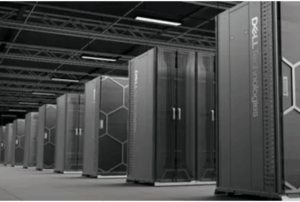


Something significant is happening beneath the surface of Nigeria’s tech economy. While headlines chase the latest app launches and startup funding rounds, billions of dollars are quietly being poured into the ground literally. Nigeria is building its first purpose-built AI data centres, and when they come fully online, they will change what is possible for every business operating in the country and across West Africa.
This is not a future prediction. It is already in motion.
What Is Actually Being Built
Nigeria already hosts 26 data centre facilities, the second largest market on the continent. But as TechCabal Insights notes, none of the existing live sites were built specifically for AI workloads. Most are colocation facilities designed for traditional cloud storage, retrofitted to handle modern compute demands. That is now changing, and the scale of investment is striking.
The centrepiece of Nigeria’s AI infrastructure push is Kasi Cloud’s LOS1 campus in Lekki, Lagos, a $250 million hyperscale facility backed by the Nigeria Sovereign Investment Authority. Built on a 4.2-hectare site with roughly 172,000 square feet of white space, it is designed to host between 3,000 and 4,000 racks at full build-out, powered by the largest dedicated data centre substation in Africa, with a total capacity of up to 100 megawatts. As of early 2026, parts of the facility are already operational, with full commercial operations expected in Q2 2026.
Beyond Kasi Cloud, the investment pipeline is deep. BusinessDay reports that telecom operators and global infrastructure firms are committing close to $1 billion to next-generation AI-ready facilities across Nigeria. The key players include:
- MTN Nigeria (Genova/Sifiso Dabengwa Data Centre, Ikeja) — a Tier III facility whose first phase launched in July 2025, with an AI-optimised second phase estimated between $240–250 million due in late 2026.
- Airtel Africa (Nxtra, Eko Atlantic) — a $120 million, 38MW hyperscale campus designed specifically for AI compute, with high-performance GPUs already delivered in late 2025.
- Equinix (LG3, Victoria Island) — a $22 million carrier-neutral facility that opened in early 2026, marking Equinix’s first newly built site in West Africa.
On the policy front, Nigeria’s National Information Technology Development Agency (NITDA) has partnered with the International Data Centre Authority (IDCA) to develop the Nigeria Digital Triangle — a network of large-scale, AI-powered data centres designed to attract global cloud companies and private investors, with a three-year development roadmap now underway.
Why This Matters for Business
For Nigerian businesses and for companies doing business across West Africa, this buildout is not just an infrastructure story. It is a commercial and strategic turning point.
Lower costs and faster speeds: Today, most AI services consumed by Nigerian companies are processed in foreign data centres in Europe or the United States. Every query, every transaction, every model inference travels thousands of miles and comes back. Local AI infrastructure means dramatically reduced latency critical for real-time applications in fintech, healthcare, and logistics and the potential for more competitive local pricing.
Data sovereignty: Nigeria’s Data Protection Act (NDPA) is tightening, and storing and processing data locally will become increasingly important for compliance across regulated industries like banking, telecoms, and healthcare. Businesses that rely on foreign infrastructure may face growing regulatory exposure.
New business opportunities: The construction of AI data centres creates demand across an entire ecosystem: energy management and solar integration for power-hungry facilities, hardware servicing and GPU logistics, cloud reselling, colocation services, and specialised security. Entire business lines can emerge at every layer from energy to applications and many of them do not require writing a single line of code.
A stronger foundation for local AI development: Nigeria has a growing ecosystem of AI startups, and until now they have had to build on foreign infrastructure paying dollar-denominated costs, dealing with latency, and feeding local data into systems controlled elsewhere. Domestic compute capacity changes that equation fundamentally.
The Challenges Are Real
The momentum is genuine, but so are the obstacles. Electricity remains the industry’s single biggest constraint. Around 600 million Africans lack reliable electricity access, and diesel backup already accounts for up to 40% of operating costs for data centre operators. High-density AI racks and advanced cooling systems require consistent, stable power that Nigeria’s national grid currently cannot reliably provide.
There is also a skills gap. Advanced AI infrastructure requires professionals in cloud computing, AI engineering, data systems management, and clean-room operations and Nigeria’s talent pipeline in these areas remains thin. The risk of top-tier professionals emigrating compounds the problem.
Then there is the question of digital colonialism. Even with local infrastructure, if the AI models running on Nigerian compute are built, owned, and controlled by foreign firms using Nigerian data, the power dynamic may shift only marginally. True digital sovereignty requires not just where data is stored, but who shapes the intelligence built from it.
The Bottom Line
Nigeria’s AI data centre moment is arriving. Whether it delivers its full promise depends on execution, reliable power, retained talent, and smart policy. But the trajectory is clear: Africa accounts for roughly 18% of the world’s population and less than 2% of global data centre capacity. That gap is beginning to close, and Nigeria is leading the push.
For businesses operating in the country, the window to prepare to understand what local AI infrastructure enables, what it demands, and how to position around it is now.