

Safaricom has reported a 67% increase in annual net profit, underscoring the telecom giant’s strengthening position across East Africa as its Ethiopian expansion begins to stabilize.
For the financial year ending March 2026, the company posted net income of 99.7 billion Kenyan shillings (approximately $772.3 million), surpassing analyst expectations and marking its third consecutive year of profit growth.
The performance was driven by two major developments: record-breaking revenues from its Kenyan business and significantly reduced startup losses from its operations in Ethiopia.
Kenya Remains Safaricom’s Profit Engine
Safaricom’s domestic market continued to anchor its financial performance, delivering the strongest operational results in the company’s history.
Service revenue in Kenya rose 10% year-over-year to Ksh400.8 billion, while EBITDA increased 13.7% to Ksh233.9 billion. Operating income climbed 15.3% to Ksh182.3 billion, and net income from the Kenyan business surged 24.7% to Ksh119.1 billion.
A major contributor to this growth remains M-Pesa, Safaricom’s flagship mobile money platform, which continues to deepen financial inclusion across Kenya.
In a market where millions remain outside the traditional banking system, M-Pesa functions as a digital wallet, payment infrastructure, and savings tool, allowing users to transact seamlessly without relying on conventional banks.
The continued rise in smartphone penetration and mobile data consumption has also accelerated revenue growth, reinforcing Safaricom’s position as both a telecom and digital financial services leader.
Ethiopia Expansion Begins To Show Promise
Safaricom’s operations in Ethiopia, once viewed primarily as a costly long-term bet, are beginning to demonstrate operational momentum.
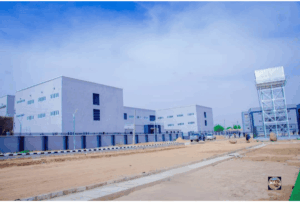
When the company entered the Ethiopian market roughly four years ago, it faced substantial startup costs tied to infrastructure deployment, staffing, licensing, and customer acquisition in a highly competitive environment.
Those investments weighed heavily on group earnings in previous years.
Now, however, the business is showing signs of scale efficiency. Safaricom Ethiopia reported 13.6 million active customers over a 90-day period, alongside 10.7 million monthly active users and 5.2 million M-Pesa customers.
The company also recorded strong growth in data usage, voice traffic, and mobile money adoption signals that the business is moving closer to long-term profitability.
As customer numbers expand, fixed infrastructure costs are spread across a larger user base, improving operational efficiency and reducing per-user servicing costs.
Investor Confidence Strengthens
Safaricom’s improving outlook has also reinforced investor confidence in its long-term expansion strategy.
The company recently secured regulatory approval to raise Ksh40 billion (approximately $308 million) through a corporate bond aimed at supporting infrastructure investments across both Kenya and Ethiopia.
Meanwhile, brand valuation firm Brand Finance ranked Safaricom as the fifth-strongest telecom brand globally, awarding it a Brand Strength Index score of 88.1, a reflection of its strong customer trust and market positioning.
Safaricom’s latest earnings highlight how telecom operators across Africa are increasingly evolving into broader digital infrastructure companies, combining connectivity, fintech, and data services under a single ecosystem.
For Safaricom, the challenge ahead lies in balancing aggressive regional expansion with profitability. But with its Kenyan business generating strong cash flows and Ethiopia gradually reducing losses, the company appears increasingly positioned to sustain growth across both markets.