

On September 13, Chowdeck CEO Femi Aluko sat down with Channels Television and said something that instantly outran the interview itself: “Chowdeck riders earn an average of N100,000 per week while staying fit. Our drivers could earn more than doctors.” Instablog9ja clipped it, posted it, and within a day it was everywhere, the kind of line that splits a comment section on contact. Some saw proof that gig work is finally paying Nigerians fairly. Others saw a CEO comparing a job with no ceiling, no pension, and no job security to a profession that takes seven years of training to even start.
Both reactions are missing the more interesting story underneath the soundbite. Chowdeck isn’t just a food delivery app anymore; it’s a five-year-old company that’s quietly become one of the clearest case studies in how food tech actually works in a market that has already burned bigger, better-funded names. Jumia Food and Bolt Food both scaled back their West African operations. Chowdeck, founded with a handful of bikes and two restaurant partners, now moves 1.5 million customers’ worth of meals across 11 cities in Nigeria and Ghana. The rider-pay claim is the headline. The real question is what’s actually built underneath—for consumers, for the businesses that rely on it, and for the economy, absorbing tens of thousands of new gig jobs at once.
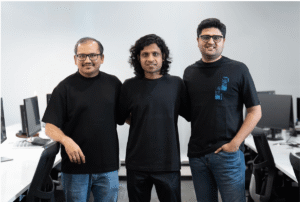
Chowdeck launched in October 2021, founded by Femi Aluko, Olumide Ojo, and Lanre Yusuf, not with a war chest, but with a handful of delivery bikes and two restaurant partners willing to bet on an app nobody had heard of yet. That’s a detail worth sitting with given where the company is now: this wasn’t a well-capitalized entrant parachuting into Nigeria’s food delivery market with international backing from day one. It grew the slower way, restaurant by restaurant, city by city.
The growth curve since then has been steep by any standard. From an initial base, Chowdeck scaled to over 1.5 million customers across 11 cities spanning Nigeria and Ghana. In 2025, the company closed a $9 million Series A round, bringing its total raised to $18.4 million, modest by global food-tech standards, but enough to fund expansion at a moment when the two biggest names in African food delivery were doing the opposite. Jumia Food shut down its operations in several markets it once treated as growth priorities. Bolt Food scaled back its West African footprint. Both retreats freed up exactly the kind of restaurant partnerships and delivery demand Chowdeck was positioned to absorb.
That timing echoes the same pattern running through the Kava story: global or regionally funded platforms deciding a market isn’t worth the burn rate, and a leaner, locally built competitor scaling into the space they left. It’s becoming less of a coincidence and more of a pattern worth naming outright that foreign capital keeps underestimating what it actually takes to win these markets, and local operators keep proving the model works when it’s built for the market that’s actually there instead of the one investors wish existed.
For the average Chowdeck user, the value proposition is simple enough to not need explaining: order food, someone brings it, and you didn’t have to leave the house or negotiate with an Okada rider yourself. But the more interesting consumer shift is what’s happened to expectations. Five years ago, food delivery in most Nigerian cities meant calling a restaurant directly and hoping they had someone available to bring it. Chowdeck alongside Bolt Food and Jumia Food in their earlier days normalized something that didn’t really exist before: the assumption that food delivery should just work, reliably, on demand, in a growing list of cities.
That shift creates its own quiet pressure. Once convenience becomes the default expectation, consumers stop comparing Chowdeck to “no delivery at all” and start comparing it to “how fast was it last time.” Every late order, every price hike, every surge fee gets measured against a standard the app itself created. That’s the tradeoff of building consumer habit successfully; it raises the bar that Chowdeck now has to keep clearing.
Then there’s the rider-pay claim itself and why it actually matters to consumers, not just riders. If Chowdeck riders are genuinely earning close to N100,000 a week, that’s not disconnected from what users pay in delivery fees, service charges, and surge pricing, which are what fund rider earnings in the first place. The CEO’s comment plays as a labor story on the surface, but for the person ordering food, it’s really a pricing story: better rider pay tends to mean the platform has room to raise fees over time, or it means Chowdeck has found a genuinely more efficient model than its rivals did. Whichever one it is, it will show up in your delivery fee before it shows up in any press interview.
Chowdeck’s growth story is usually told from the consumer or rider angle, but the restaurants on the other end of the app are arguably where the real business case gets made. For a small food business in Lagos, Abuja, or Accra, partnering with a platform like Chowdeck isn’t just a convenience feature; it’s access to an entirely new customer base without the capital cost of building delivery infrastructure themselves. No fleet of bikes to manage, no dispatch riders to hire and insure, no logistics headache. That overhead gets absorbed by the platform instead.
The tradeoff, and it’s a real one, is commission. Every order routed through Chowdeck comes with a cut that goes to the platform, which means restaurant margins on delivery orders are structurally thinner than on walk-in customers. For a small vendor operating on already-tight margins, that’s not a minor detail; it’s the difference between delivery being a genuine growth channel or just a break-even volume play that keeps the lights on. This is the same tension every food-tech platform globally has had to navigate, and it’s part of why Jumia Food and Bolt Food’s retreats matter here too: when a delivery platform pulls back or shuts down in a market, the restaurants that built order volume around it don’t just lose a sales channel, they lose it overnight, with no transition plan.
What’s notable about Chowdeck’s expansion into 11 cities across two countries is that it’s also an expansion of exactly this bet, repeated market by market with restaurants trading margin for reach, and betting that Chowdeck sticks around longer than its rivals did. So far, the numbers suggest that bet has paid off better than the alternative. A restaurant partnered with a platform that folds loses the investment in setting up for delivery in the first place. A restaurant partnered with one still expanding five years in gets to keep compounding on it.
This is where the viral comment made by Chowdeck’s CEO deserves a proper unpacking, because both the cheering and the outrage it generated are reacting to a comparison that’s more complicated than it sounds. If Chowdeck riders are genuinely averaging close to N100,000 a week, that’s a real number worth taking seriously because it would put top-performing riders ahead of what many entry-level salaried professionals, doctors included, take home monthly in Nigeria’s public sector. That’s not nothing, and dismissing it outright ignores something important: gig platforms like Chowdeck have created a genuine income floor for thousands of young Nigerians who had no formal-sector opportunity waiting for them.
But the comparison breaks down exactly where every gig-economy comparison to salaried professions breaks down. A doctor’s income comes with a ceiling that keeps rising as a result of specialization, tenure, private practice, and sometimes relocation abroad. A rider’s income is a function of hours logged, fuel costs absorbed, weather, and demand that day; there’s no next rung to climb into, no pension accruing, and no employer-covered healthcare if an accident takes them off the road for a month. “More than doctors” measures one weekly number against another and skips over which of those two jobs has a floor if things go wrong.
The economic story that actually matters here is bigger than any one CEO’s interview line: Chowdeck, alongside its rivals and survivors in this space, has become a genuine job creator at a moment when Nigeria’s formal labor market isn’t absorbing its young population fast enough. That’s real economic value; it just comes with the open question every gig economy eventually has to answer: what happens to that workforce a decade from now, when today’s riders are older, and “flexible income with no ceiling” has quietly become “no safety net and no way out”? Chowdeck’s growth answers the near-term jobs question well. It hasn’t yet had to answer the long-term one.
Now let’s strip away the viral clip, and what’s left is one of the more grounded food-tech stories to come out of Nigeria in years, not because it’s flashy, but because it’s the opposite. Chowdeck didn’t launch with a war chest or a foreign parent company underwriting its losses. It grew from two restaurant partners and a handful of bikes into a platform moving meals for 1.5 million customers across two countries in the same stretch of time that better-funded rivals decided this market wasn’t worth the burn rate.
That pattern of lean and locally built solutions is making operators scaling into the space that global and regional players abandoned start to look less like a coincidence across Business Verge’s coverage this week and more like the actual story of the moment: Kava did it to streaming. Chowdeck is doing it to food delivery. Whether it holds up as a genuine playbook or just a run of lucky timing is the kind of question only a few more years will answer.
As for the soundbite that started this piece—”riders could earn more than doctors”—it’s not really a labor claim or a PR stunt. It’s a snapshot of an economy still figuring out what gig work is worth, measured against a profession whose value was never just about the weekly paycheck to begin with. Chowdeck’s growth proves the jobs are real. What it hasn’t proven yet is what those jobs will become ten years from now, and that’s the question worth carrying into whatever Nigeria’s food-tech story looks like next.