

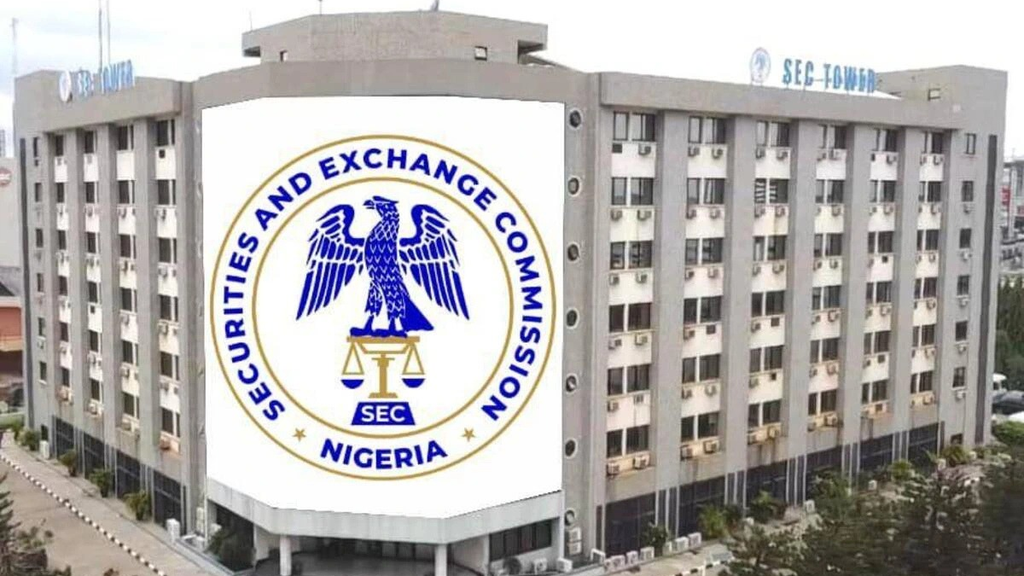
Nigeria’s Securities and Exchange Commission is reviewing the proposed allotment of shares from Dangote Petroleum Refinery and Petrochemicals’ ₦2.15 trillion initial public offering, with investor protection emerging as a key consideration before the shares begin trading on the Nigerian Exchange.
The regulator is examining the basis of allotment submitted by the issuing houses and the company after the offer attracted approximately ₦5.85 trillion in applications from nearly 3.8 million investors.
The figures underline the scale of demand for the refinery’s shares but also create a difficult allocation question: how should the available 4.1 billion shares be distributed when demand is almost three times the number of shares on offer?
Why the SEC is scrutinising the allotment
The Dangote Refinery IPO was structured as a broad public offering, with a strong emphasis on giving individual investors access to one of Africa’s largest industrial businesses. However, the final allocation must also account for institutional and large-ticket investors that submitted substantial applications.
The Independent Shareholders Association of Nigeria had called for protection for retail and minority investors, including consideration of a defined allocation for Nigerian retail investors.
The SEC’s concern is therefore not simply how much demand the IPO generated, but whether the eventual allocation process treats different categories of investors fairly.
The regulator is expected to issue its no-objection to the basis of allotment on November 17, after which the company can proceed with the next stages of the listing process.
Nearly 3.8 million investors participated.
The scale of individual participation is one of the most significant features of the offering. Approximately 3.8 million investors submitted applications for the refinery’s shares. Investors applied for about 11.15 billion shares valued at ₦5.85 trillion, compared with the 4.1 billion shares offered at ₦525 each.
That means applications were roughly 2.7 times the number of shares available.
Importantly, the ₦5.85 trillion figure represents applications, not the final amount raised. The actual proceeds will depend on the approved allotment and the amount ultimately allocated to successful applicants.
The number of investors is particularly significant because the refinery had marketed the transaction as a broad ownership opportunity for Nigerians and other African investors.
It also represents a substantial expansion in participation in Nigeria’s equity market.
The retail participation question
The sheer number of applicants does not tell the whole story. While millions of individuals participated, a significant portion of the total subscription value came from large investors.
That creates a gap between the number of people seeking shares and the amount of capital they represent.
A small investor may have applied for a relatively modest number of shares, while institutional investors can submit applications worth hundreds of millions of dollars.
The allocation process therefore has to balance two objectives: ensuring that the offer remains commercially viable while preserving meaningful access for the large number of retail investors who participated.
This is particularly relevant because the refinery’s public offer was positioned as a way of widening ownership of one of Nigeria’s most prominent industrial assets.
The Pan-African interest
Subscription data showed strong interest from investors across African markets, while large institutional investors also participated. Pan-African Refinery Investment SPV committed to subscribe for up to $400 million of the IPO, subject to allotment, while pension funds and other institutional investors also submitted significant applications.
The international interest reinforces the significance of the transaction beyond Nigeria’s domestic capital market.
The refinery is seeking to use the public market not only to raise capital but also to broaden its shareholder base as it expands its operations.
A relatively small public stake
Despite the size of the IPO, the public offer represents only a small portion of the refinery. The 4.1 billion shares offered to investors represent approximately 3.3% of the enlarged share capital based on the company’s offer structure.
That means even a successful allocation to millions of investors would not materially dilute the existing control structure of the business.
The significance of the IPO therefore lies less in transferring control and more in opening a small portion of the refinery’s ownership to the public while bringing a major privately developed Nigerian industrial asset into the capital market.
What investors should expect next
The next major step is the SEC’s approval of the proposed basis of allotment. Under the revised timetable, the SEC’s no-objection is expected on November 17, followed by publication of the allotment announcement and the transfer of net offer proceeds.
Investors who are unsuccessful or receive less than they applied for are expected to receive refunds for surplus funds, while successful investors will eventually have their shares credited through the Central Securities Clearing System.
The prospectus had originally provided for trading to begin 15 business days after allotment. The revised process therefore points towards a late-November or early-December market debut, depending on the final regulatory and settlement timetable.
The refinery’s own IPO portal confirms that the offer closed on October 27 and that applications are currently being checked.
More than a Dangote Refinery listing
The outcome of the allotment could have implications beyond the refinery. If millions of retail investors receive shares and subsequently remain active in the market, the transaction could deepen participation in Nigeria’s equities market and encourage other large companies to consider public offerings.
The Securities and Exchange Commission is already pointing to the potential for more major Nigerian companies to access the market, including NNPC.
NNPC Group Chief Executive Officer Bashir Bayo Ojulari said earlier this month that the state-owned energy company was considering offering between 5% and 10% of its equity to investors, primarily through Nigeria’s domestic market, with a possible secondary listing abroad.
However, NNPC’s proposed IPO remains under consideration and has no fixed launch date.
For now, attention remains on the Dangote Refinery. The offer has already demonstrated that there is substantial appetite for large Nigerian companies among both retail and institutional investors. The next test is whether the capital market can translate that demand into an allotment process that investors, particularly the millions of small investors who participated, consider fair.
How the SEC and issuing houses handle that allocation could influence confidence in not only Dangote Refinery’s debut but also Nigeria’s ability to attract a new generation of retail investors into the public market.