

For years, the story of Nollywood and streaming was a story of departure. Amazon Prime Video packed up and left the Nigerian market entirely. Netflix quietly slowed its local commissions and narrowed its slate. Showmax backed by two global giants in MultiChoice and NBCUniversal, shut down after years of losses. IROKOtv, the platform that pioneered Nollywood streaming in the first place, folded. One by one, the players betting on African content walked away, and the assumption that followed them out the door was simple: African streaming just doesn’t work at scale.
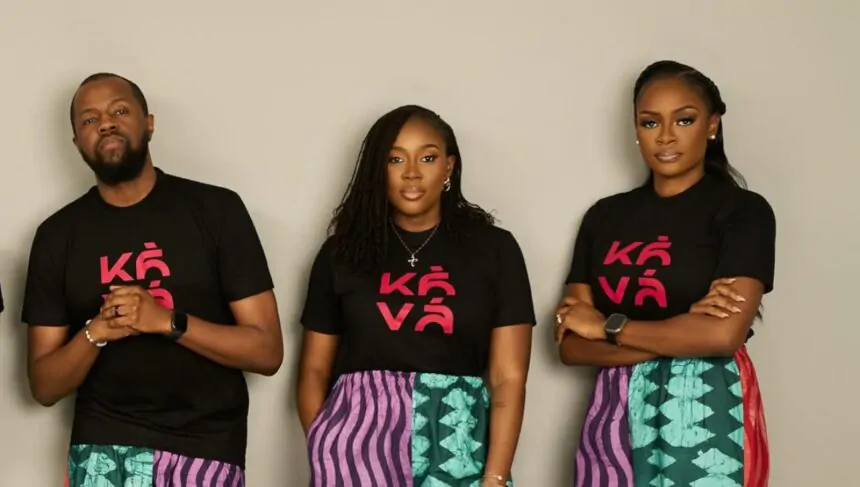
Then, in the gap they left behind, two Nigerian companies did something nobody was expecting: they built a platform of their own. Kava, a joint venture between Filmhouse Group and Inkblot Studios, launched in July 2025 with just over 30 titles and a bet that Nollywood didn’t need Silicon Valley to reach its own audience. A year later, it has crossed 102,000 paying subscribers and 270,000 registered users and just released its first fully original production. The question this raises isn’t small: if the platforms that left were global and well-funded, and the one that’s growing is local and self-built, what does that say about who actually understands how to monetize African stories?
To understand why Kava’s growth matters, you have to understand how empty the field actually was when it launched. IROKOtv had spent over a decade trying to make Nollywood streaming work internationally, it was the first real attempt at putting Nigerian films behind a subscription wall and even it couldn’t sustain the model long-term. Amazon Prime Video’s full exit from Nigeria removed one of the two truly global players from the board. Netflix didn’t leave outright, but it pulled back hard on local original commissions, shifting from “investing in Nollywood” to “occasionally licensing it.” And Showmax arguably the best-positioned of them all, backed by MultiChoice’s decades of African pay-TV infrastructure and NBCUniversal’s content muscle, shut down entirely.
That’s four different exit strategies, four different reasons, and one shared conclusion each of them seemed to reach: African streaming, done the way global platforms do streaming, doesn’t pencil out. High content costs, low willingness-to-pay relative to Western markets, patchy internet infrastructure, and payment friction all played a role depending on the platform.
What makes Kava’s timing notable is that it didn’t launch in spite of that track record; it launched directly into it, in July 2025, right as the field was clearing out. Filmhouse Group brought Nigeria’s largest cinema chain and distribution muscle. Inkblot Studios brought production pedigree. Together, the bet wasn’t “let’s out-Netflix Netflix”; it was narrower and, it turns out, smarter: build specifically for the audience and price point Nollywood already has, instead of trying to import a model built for Los Angeles and London.
A year in, the numbers are the part that turns this from “interesting local platform” into an actual business story. Kava has crossed 102,000 paid subscribers and 270,000 registered users built on weekly title additions, region-specific pricing tuned to what Nigerian and diaspora audiences can actually afford, and fast post-theatrical availability that gets films onto the platform while cinema buzz is still fresh.
That regional pricing is worth sitting with for a second, because it’s the clearest sign of the strategy at work: ₦3,000 a month for Nigerian subscribers, $2.99 a month for diaspora users with new diaspora sign-ups getting a 50% discount on their next three months on top of that. It’s a deliberate split, not an accident. Nigerian pricing is built around local spending power; diaspora pricing is built to undercut what a Netflix or Prime subscription already costs someone abroad, while giving them something those platforms don’t reliably offer; Nollywood films landing on the platform soon after they leave Nigerian cinemas. With over 17 million Nigerians living abroad, that diaspora tier isn’t a side market. It may be the more profitable one.
Then came the statement piece: “A Mama Deola Wedding Story,” Kava’s first fully original production, premiering September 3, 2026. It’s the feature debut of Folagade Banks, built around the viral “Mama Deola” skit character, directed by Femi Adebayo, with a cast that includes Shaffy Bello, Toyin Abraham, and Erica Nlewedim. One wedding sequence reportedly used over 600 cast members in a single scene described as the largest ever staged in a Nollywood production.
That scale matters beyond the spectacle. A platform’s first original is always a signal of intent; it’s where a company shows what kind of ambition its subscriber base can actually fund. Kava didn’t debut with something small and safe. It debuted with the biggest production sequence in Nollywood history, backed by a platform that didn’t exist fourteen months ago. That’s either confidence or overreach, and the answer depends on whether 102,000 subscribers can become the kind of recurring revenue that makes a second original and a third possible.
Now is this a threat to westerner streamers? This is the question the headline promises, so let’s answer it honestly: not yet, and maybe not ever in the way people imagine. 102,000 paying subscribers is a real number for a fourteen-month-old African platform; it’s not a real number next to Netflix’s global subscriber base. Nobody at Netflix is losing sleep over Kava the way a legacy taxi company loses sleep over a well-funded ride-hailing app.
But “threat” might be the wrong frame entirely. The more accurate read is that Kava isn’t trying to out-compete Netflix for Netflix’s audience; it’s serving an audience Netflix already decided wasn’t worth the investment. That’s a different game. Jason Njoku, founder of IROKOtv, put it bluntly after his own platform’s exit: over ten years, IROKOtv spent close to $100 million between revenue and venture capital raised and still ended up in what he called “full survival mode.” If that’s what it costs a well-funded, first-mover platform to lose this market, Kava’s early traction isn’t proof it can beat Netflix at scale, it’s proof that a leaner, locally-built model might survive where a globally-funded one didn’t.
That’s the real story here, and it’s a more interesting one than “African streaming vs. the West.” It’s not a scrappy underdog preparing to dethrone a giant. It’s a company betting that the giants misread the market entirely that Nollywood’s audience was never going to be won with a Silicon Valley playbook, and that the platform which finally cracks it will look a lot more like Kava than like Netflix.
Zoom out, and Kava’s traction is a small but real data point in a much bigger conversation about where value actually gets captured in African entertainment. For years, the economics of Nollywood ran through cinema box office and, at best, a licensing fee from whichever foreign platform was buying rights that year. That model means the money and the leverage sit with the distributor, not the industry producing the content. When Netflix or Amazon decides a market isn’t worth the investment, they simply leave, and the local industry absorbs the loss with no say in the decision.
A platform like Kava changes who holds that leverage. It’s owned by the people who actually make and distribute the films — Filmhouse Group’s cinema and distribution infrastructure, Inkblot’s production pedigree which means subscriber revenue, pricing decisions, and content strategy stay inside the Nigerian film economy instead of flowing out to a foreign parent company. That’s the difference between Nollywood being a content supplier to someone else’s platform and Nollywood owning its own distribution pipe.
There’s a jobs and production-spend angle too. A 600-person wedding scene isn’t just a flex, it’s local spend: cast, crew, catering, logistics, all inside Nigeria’s economy rather than financed and controlled abroad. If Kava’s subscriber base keeps growing enough to fund a second and third original at that scale, that’s recurring local production investment that doesn’t depend on whether a foreign platform’s Nigeria strategy is in favor this quarter or not.
The honest caveat: 102,000 subscribers doesn’t yet generate the kind of revenue that funds a film industry on its own. This is early proof of concept, not proof of a new economic model. But it’s the first real evidence in years that African-owned distribution can retain paying subscribers at all that alone reframes the conversation from “can Nollywood survive without Western platforms?” to “What does Nollywood look like once it stops needing their permission?”
The platforms that left Nigeria didn’t leave because Nollywood’s audience disappeared; they left because their model didn’t fit that audience. Kava bets that a model built from the inside, at Nigerian prices, with Nigerian ownership, might succeed where four well-funded outsiders couldn’t. A year in, with six figures of paying subscribers and its most ambitious production yet, that bet is holding up better than most expected.
Whether “A Mama Deola Wedding Story” becomes the moment Nollywood-owned streaming proves itself, or just an impressive one-off before the harder economics of sustaining originals catches up, is the question worth leaving with readers. Either way, the more important shift may have already happened: for the first time in years, the platform growing in Nigeria’s film industry is one Nigeria actually owns.