

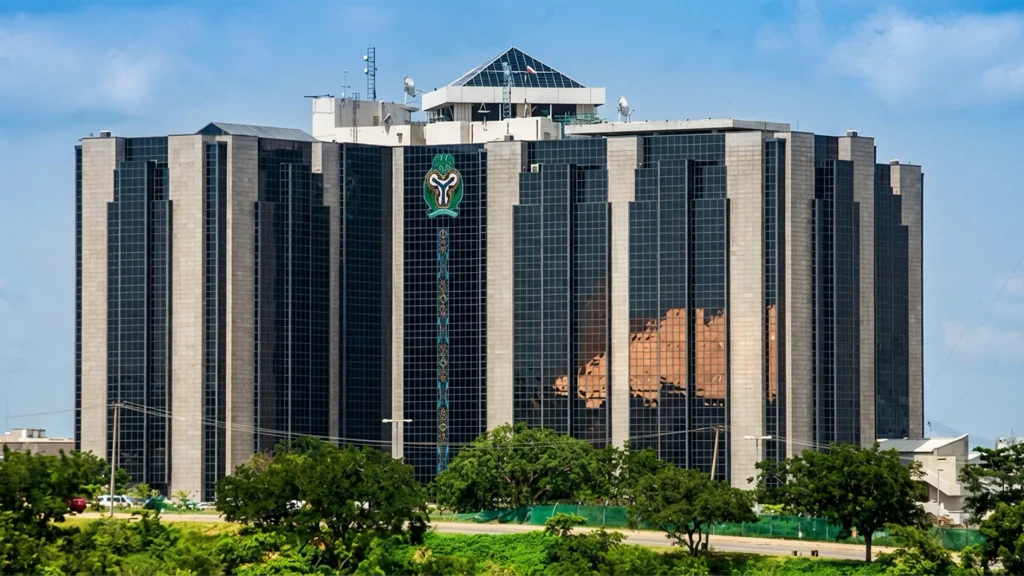
The Central Bank of Nigeria repaid approximately ₦10.69 trillion in maturing securities against ₦7.49 trillion raised through fresh auctions, as banking system liquidity increased and short-term government securities yields declined.
The Central Bank of Nigeria (CBN) recorded an estimated net repayment surplus of ₦3.20 trillion in October 2026, as repayments on maturing Open Market Operations (OMO) bills and Nigerian Treasury Bills (NTBs) exceeded the value of new securities issued during the month.
Analysis of CBN auction and maturity data shows that approximately ₦10.69 trillion was returned to investors between October 2 and 29, compared with ₦7.49 trillion raised through fresh OMO and Treasury Bills auctions.
The difference represents a net repayment surplus of approximately ₦3.20 trillion, indicating that new issuances replaced about 70% of the funds returned to investors during the period.
The development marks a shift from September 2026, when the CBN recorded a net liquidity withdrawal of approximately ₦6.62 trillion through OMO operations, following substantial sales of government securities.
Repayments Outpace Fresh Securities Issuance
The CBN conducted three OMO auctions and three Treasury Bills auctions during October, with combined allotments of approximately ₦7.49 trillion. Investor subscriptions across the auctions reached ₦13.23 trillion, but only about 57% of the bids were accepted.
OMO auctions accounted for ₦6.18 trillion in allotments against approximately ₦6.71 trillion in identified maturities, resulting in a net repayment surplus of about ₦527 billion.
For Treasury Bills, approximately ₦1.31 trillion was raised against ₦3.985 trillion in reported repayments, leaving a difference of about ₦2.68 trillion.
The repayment gap widened towards the end of October as monetary authorities accepted fewer bids at successive auctions.
At the October 28 Treasury Bills auction, the Debt Management Office (DMO), through the CBN, allotted just ₦71.16 billion from investor subscriptions of approximately ₦1.91 trillion, leaving about 96% of bids unfilled.
The CBN had initially absorbed more liquidity during its October 6 OMO auction, allotting ₦3.31 trillion against ₦2.17 trillion in maturing securities.
However, subsequent maturities of ₦2.41 trillion on October 13 and ₦2.13 trillion on October 27 changed the monthly position.
The final two auctions raised only ₦316.10 billion against approximately ₦4.19 trillion in subscriptions, leaving ₦3.87 trillion in investor bids unallotted.
Banking System Liquidity Rises as Interest Rates Decline
The repayment surplus coincided with substantial placements by banks at the CBN’s Standing Deposit Facility (SDF), where financial institutions deposit excess funds with the apex bank.
According to CBN financial data, net SDF balances reached approximately ₦8.41 trillion on October 28 before declining to ₦7.63 trillion on October 29 and ₦7.19 trillion on October 30.
The elevated balances indicate that substantial funds remained deposited at the central bank rather than being deployed elsewhere in the financial system. Short-term securities yields also declined during the period.
The stop rate on a 138-day OMO instrument fell to 17.63% on October 22 from 20.01% recorded for a comparable tenor on August 13, representing a decline of 238 basis points.
Similarly, the 180-day OMO instrument cleared at 17.14%, while the 364-day Treasury Bills stop rate declined to 15.80% at the October 28 auction.
These movements followed the Monetary Policy Committee’s September decision to reduce the Monetary Policy Rate (MPR) to 23%.
For investors, declining yields could mean lower returns on newly purchased government securities. However, existing fixed-rate securities may benefit from higher market prices when prevailing interest rates fall.
Analysts Differ on the Impact of Higher Repayments
Market analysts have offered different perspectives on what the October repayment pattern means for the financial system.
Aruna Kebira, Chief Executive Officer of Globalview Capital Limited, described the higher repayments as positive, noting that the CBN was returning more funds than it was raising through new securities.
He also suggested that the repayment pattern could partly be connected to efforts to support liquidity following the substantial subscriptions to the Dangote Petroleum Refinery public offer, although he acknowledged that the CBN’s intentions could not be established from the available figures.
The Dangote Refinery’s ₦2.15 trillion public offer was reportedly subscribed three times over, implying potential demand of approximately ₦6.45 trillion.
However, Olubunmi Ayokunle, Head of Financial Institutions Ratings at Agusto & Co., offered a different perspective on the domestic liquidity implications.
Ayokunle explained that a significant proportion of investors holding OMO securities are foreign investors. Consequently, repayments on these instruments do not necessarily translate into an equivalent increase in funds available within the domestic banking system.
He also distinguished between Treasury Bills, which are issued on behalf of the Federal Government, and OMO instruments, which the CBN uses as a discretionary monetary policy tool to manage financial system liquidity.
According to him, subscriptions to public offers generally involve transfers between bank accounts rather than an outright removal of funds from the financial system.
What the October Figures Mean for Nigeria’s Financial Markets
The estimated ₦3.20 trillion repayment surplus should not be interpreted as a direct measure of new money entering the Nigerian economy.
It represents the difference between specified securities maturities and fresh auction allotments. Other factors, including government spending, foreign exchange transactions, currency movements, and repayments to foreign investors, also influence actual domestic liquidity conditions.
Similarly, the high balances recorded at the CBN’s Standing Deposit Facility do not automatically translate into increased lending to businesses and households.
For the Federal Government, continued under-allotment at Treasury Bills auctions could require adjustments to its short-term financing plans, while lower stop rates may help moderate borrowing costs on newly issued securities.
For banks and fixed-income investors, October’s developments point to a period of substantial funds being returned through maturing securities, alongside lower yields on newly issued short-term instruments.
The direction of liquidity and interest rates in the coming months will depend on subsequent CBN OMO operations, government borrowing requirements, and the central bank’s assessment of inflation and financial system conditions.