

Nigeria’s Biochar Industrial Group is betting that agricultural waste can become more than a disposal problem. Its new $1.5 million funding will help the startup turn that waste into biochar and carbon-removal credits.
What if the waste left behind by food factories could become another source of revenue?
That is the idea behind Biochar Industrial Group (BIG), a Nigerian climate-tech startup that has raised $1.5 million in pre-seed funding to expand its operations across Sub-Saharan Africa.
The round was led by BREEGA, with participation from The Catalyst Fund, while the Mulago Foundation provided non-dilutive funding.
BIG is tackling a problem that is easy to overlook: what happens to the shells, husks, cobs and other agricultural waste produced by food-processing companies?
Instead of allowing the waste to decompose or become another disposal cost, BIG wants to turn it into something businesses can actually earn from.
Turning waste into something valuable
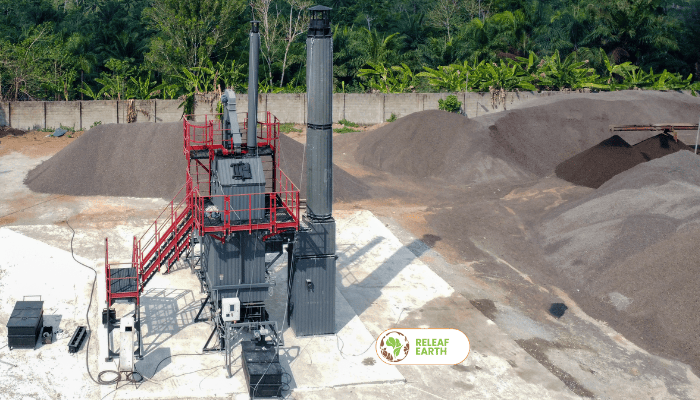
At the centre of BIG’s model is pyrolysis, a process that heats agricultural waste in an oxygen-limited environment and converts it into biochar.
The company installs and operates the equipment directly at food-processing facilities. This means factories do not have to transport large amounts of bulky waste to a distant processing plant.
The resulting biochar can be used as a soil amendment, while the process can also generate carbon-removal credits that can be sold to companies looking to compensate for emissions.
It gives agricultural processors another way to look at waste.
Something that once needed to be removed can potentially become part of a new revenue stream.
Why BIG is betting on African agriculture
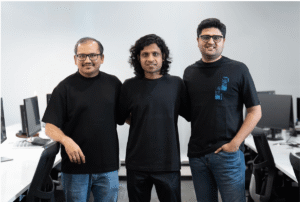
BIG was founded by Ikenna Nzewi, Uzoma Ayogu and Isaiah Udotong, who previously worked together at Releaf Earth, a Y Combinator-backed agro-processing company.
Their experience is largely rooted in industrial agriculture, including factory operations, food processing and supply chains.
Now, they are applying that experience to carbon removal.
The timing is also important. African agriculture produces huge amounts of biomass waste, while farmers across the continent continue to deal with declining soil quality.
BIG’s approach attempts to address both problems at the same time: deal with agricultural waste while producing biochar that can go back into agriculture.
The business behind the climate story
There is more to BIG’s model than simply making biochar.
The startup operates a Biochar-as-a-Service model, where it works with food processors and handles the deployment of the pyrolysis equipment.
That could make the model easier for factories that may not have the capital or expertise to build their own biochar operations.
The new funding will help BIG expand factory partnerships, deploy more equipment and strengthen the systems needed to monitor and verify carbon removal.
For BIG, the opportunity is bigger than waste management.
It is about creating a business around something African industries already have in large quantities.
From agricultural waste to climate revenue
BIG is entering a growing carbon-removal market, but the company still has to prove that its model can work at scale.
It will need to show that food processors can consistently supply suitable waste, that the equipment can operate economically and that buyers are willing to pay for the resulting carbon-removal credits.
For now, the $1.5 million gives the company room to take its idea beyond individual facilities and into a much larger African market.
And perhaps that is the most interesting part of the story.
Africa’s agricultural waste has often been treated as a problem.