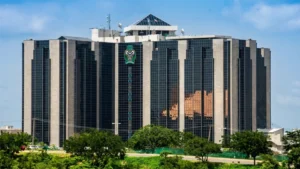


At a 2026 banking operations conference in Lagos, a CBN Governor’s representative said something that would sound almost quaint in most economies but lands as genuinely significant in Nigeria: “Cash remains king.” It’s a strange thing for a central bank to be reassuring people about it in an era of instant transfers and QR codes, and it’s an admission, more than a boast. Electronic payment volumes have surged 276% over five years, with transaction values up 581%. Nigeria is, by every digital metric, racing toward a cashless future. And yet, for tens of millions of Nigerians, the actual experience of getting physical cash into their hands has quietly come to depend not on a bank, not on an ATM, but on a man or woman with a POS machine on a street corner.
The numbers behind that shift are staggering once you actually look at them: over 26.5 million registered POS terminals now operate across the country, more than one for every eight Nigerians. These aren’t a convenience layered on top of a functioning banking system in more than 300 local government areas with no bank branch at all; they are the banking system. A rational response to real gaps in service, or a quiet admission that the formal banking sector has outsourced its most basic function, giving people access to their own money to an unregulated army of small operators standing in the gap, left open?
That question got a lot more urgent this year. As of April 1, 2026, the CBN rolled out sweeping new agent banking rules: every POS agent must now work exclusively with a single bank or fintech, cash transactions are capped, and agents are subject to new oversight requirements for the first time. That’s a regulator finally reaching for the reins of a system that grew up entirely outside its original plans, and the story worth telling isn’t just how POS agents became Nigeria’s new cash banks. It’s what happens now that the real banks are trying to take the system back.
To understand why POS agents became this essential, you have to go back to the moment that broke the old system’s credibility entirely: the 2023 naira redesign crisis, when the CBN’s attempt to swap old notes for new ones collided with a severe supply shortfall and left much of the country unable to access physical cash at all. ATMs ran dry for weeks. Bank branches had queues stretching around the block. For ordinary Nigerians, traders who needed change for a sale, commuters who needed fare money, families who needed cash for everyday transactions because the formal banking system simply stopped functioning as a reliable source of cash, at the exact moment they needed it most.
Into that vacuum stepped an army of small operators who’d already been quietly building infrastructure for years: agents for Moniepoint, OPay, PalmPay, and dozens of smaller networks, each armed with little more than a POS terminal, a bank relationship, and a willingness to stand on a street corner all day. They didn’t need the CBN’s permission to solve the problem, they just needed liquidity and a working terminal. What started as a convenience for people who’d met their daily ATM withdrawal limit became, almost overnight, the only reliable cash access point for millions.
That growth never really reversed once the crisis passed, because the underlying gap it exposed never actually closed. In over 300 local government areas, there’s still no bank branch at all; POS agents aren’t competing with a bank down the street, they’re the only financial access point that exists. Even in cities with plenty of bank branches, agents fill a different gap: speed, proximity, and a tolerance for small, everyday transactions that traditional banking was never built to handle efficiently. By August 2024, the Nigeria Inter-Bank Settlement System was already counting over 26.5 million registered terminals processing trillions of naira, which is a parallel cash economy that had scaled up entirely through informal demand, years ahead of any CBN framework built to govern it.
For years, the POS agent system operated with a structural quirk that was both its biggest strength and its biggest regulatory blind spot: agents could juggle terminals from multiple banks and fintechs at once, switching between them to beat network downtime, dodge liquidity shortages, or simply offer whichever service was fastest at that moment. That flexibility is exactly what made the system so resilient; when one network went down, a customer could usually just walk to the same agent and try a different machine. It’s also exactly what made the system almost impossible for any single institution, or the CBN itself, to fully monitor.
The new agent banking guidelines, released in October 2025 and taking effect April 1, 2026, end that flexibility outright. Every POS agent must now be affiliated with a single licensed bank, microfinance bank, mobile money operator, or super-agent with no more multi-network juggling. Alongside the exclusivity rule came tighter transaction limits: customers capped at N100,000 in daily cash transactions and N500,000 weekly, with agents themselves limited to N1.2 million in daily cash-out activity. The guidelines also introduced the kind of baseline protections agents had never had before mandatory training, written agreements, and defined dispute resolution timelines, treating what had been an entirely informal workforce as something closer to a regulated financial sector role for the first time.
The logic behind the reform is sound on paper: better traceability, reduced fraud exposure, and a cleaner picture of where cash is actually moving through the system. But the president of the Association of Mobile Money & Bank Agents in Nigeria put his finger on the tension this creates on agency banking, he said, has always had two layers: one regulated, one “entrepreneurial in nature, which can’t be formally regulated.” The entire reason this system filled the gap banks left behind was its informality due its ability to adapt, improvise, and route around network failures in real time. Formalizing it solves the oversight problem. Whether it quietly undoes the resilience that made the system work in the first place is the open question the April 2026 rules haven’t yet answered.
For the agents themselves, this transition is a livelihood question before it’s a policy question. Many of these operators have spent years building a business model around juggling multiple bank relationships precisely because no single institution could guarantee reliable liquidity or network uptime on its own. One Lagos POS operator described maintaining accounts across several different banks specifically so she could withdraw up to N500,000 from each one weekly, which is a workaround built entirely around the system’s old flexibility. Forced into a single-principal relationship, agents lose that hedge. If their one chosen partner has a bad liquidity day, a network outage, or simply offers worse commission terms than a competitor, there’s no longer a second machine to fall back on. For an agent whose entire income depends on consistent daily transaction volume, that’s a real operational risk, not a bureaucratic inconvenience and it’s compounded by the fact that most agents still operate with no formal employment protections or safety nets, despite routinely handling large sums of other people’s cash.
There’s a sharper equity problem sitting underneath the efficiency gains, too. As banks and fintechs lean harder on algorithmic systems to flag fraud risk across their now-exclusive agent networks, rural agents are being quietly disadvantaged by the data itself. Poor connectivity in many rural areas means more transaction timeouts and retries which is a pattern that looks identical to fraud to a model trained on urban transaction behavior. The result is what researchers have called “discrimination laundering”: an agent’s bad luck with network infrastructure gets converted into a low trust score, and a legitimate rural operator often serving the exact underserved communities the whole system exists to reach ends up flagged, restricted, or cut off entirely. The agents furthest from formal banking infrastructure are the ones most likely to be penalized by the system meant to formalize them.
Zoom out to the economic picture, and the stakes are bigger than any one agent’s commission. The CBN’s own data credits ATMs and POS terminals together with a 4.6% increase in cash circulation in 2025, which is tangible evidence that this parallel system is genuinely moving money where the formal sector alone wasn’t reaching. That’s real financial inclusion, delivered by an entrepreneurial workforce the CBN didn’t design and, until this year, barely regulated. The open question the April 2026 reforms are really testing is whether formalizing that workforce protects its reach or whether tighter limits, single-bank dependency, and algorithmic gatekeeping quietly shrink the very system that made Nigeria’s financial inclusion numbers look as good as they currently do.
There’s a quiet irony sitting at the center of this story: the system that stepped in because Nigeria’s banks weren’t reaching enough people is now being regulated by the very institution whose gaps it was built to fill. That’s not necessarily the wrong move with over 26.5 million unregulated terminals processing trillions of naira with no formal oversight was never a sustainable long-term arrangement, and agents working without written agreements or dispute protections deserved better than the informal arrangement they’d been operating under. But formalization always comes with a tradeoff, and this one is real: the flexibility that let agents route around network failures, liquidity shortages, and bank-specific downtime is exactly what the single-principal rule removes.
Whether Nigeria ends up with a safer, more traceable cash-access system or a more fragile one depends on something the April 2026 reforms can’t fully control: whether banks and fintechs actually step up to guarantee the liquidity and reliability their now-exclusive agents need, or whether they simply inherit the convenience of a captive network without inheriting the responsibility that used to be distributed across several institutions at once. For the millions of Nigerians in those 300-plus local government areas with no bank branch, the answer to that question isn’t academic. It’s the difference between being able to access their own money on a given Tuesday or not.
The deeper question this piece opened with is this a sign of real inclusion, or a sign of service lag dressed up as innovation? It doesn’t resolve neatly either way. It’s probably both at once: a genuine, grassroots solution to a real problem, operating inside a formal banking sector that still hasn’t figured out how to serve its own population directly. POS agents didn’t make Nigeria’s banks obsolete. They just made the gap in Nigerian banking visible enough that regulators finally had to respond to it.