


National E-hailing Federation of South Africa (NEFSA) is pushing an ambitious plan to transition thousands of young ride-hailing drivers from the road to the classroom, as part of a broader effort to strengthen the country’s human capital.
The initiative described as an Education Development Programme targets drivers working with platforms like Uber and Bolt, many of whom are between the ages of 18 and 30. According to NEFSA, this demographic accounts for nearly 68% of the country’s estimated 162,000 e-hailing drivers.
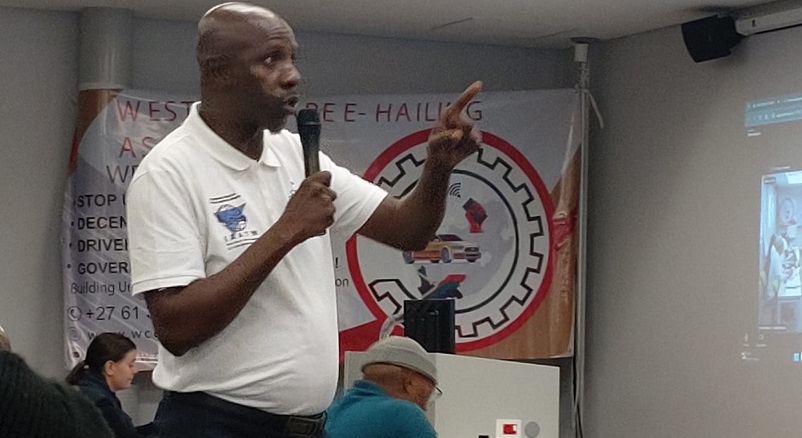
Speaking on the initiative, Uhuru Lekgokwane emphasized that the programme is designed to move beyond short-term income generation and create long-term career pathways. While some drivers already qualify for university admission, many lack access to higher education due to financial constraints.
Lekgokwane argues that focusing solely on driving as a career path risks wasting human potential. The programme aims to channel young drivers into diverse fields including engineering, law, business, and technical professions areas seen as critical to South Africa’s economic future.
Unlike existing initiatives such as those by the Transport Education Training Authority (TETA), which are largely transport-focused, NEFSA’s model will allow participants to pursue courses beyond the transport sector. However, transport-related disciplines like fleet management and vehicle inspection will still form part of the offering.
The federation is currently consulting experts to refine the policy and structure of the programme. Early-stage discussions with institutions such as University of the Free State and University of the Western Cape suggest growing institutional interest in the initiative.
To address the high cost of education, NEFSA plans to explore public-private partnerships and funding support from social agencies, positioning itself as a bridge between young drivers and tertiary institutions.
At its core, the initiative reflects a broader shift in how Africa’s gig economy is being viewed not just as a source of income, but as a transitional phase that can be leveraged to build skills and unlock long-term economic mobility.
For NEFSA, the goal is clear: reduce “human capital waste” and ensure that today’s drivers are not locked out of tomorrow’s opportunities.