
Nigeria’s Securities and Exchange Commission (SEC) has encouraged startups and businesses to look beyond traditional bank loans and explore alternative funding options, including crowdfunding, commercial papers and debt financing.
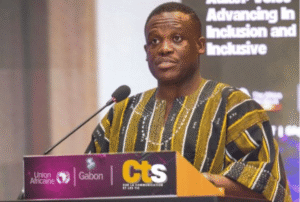
Speaking at Moonshot by TechCabal in Lagos, SEC Director-General Dr Emomotimi Agama said businesses should choose financing options that align with their growth plans, warning that relying on short-term bank loans to fund long-term projects could put companies under financial pressure.
“What most people have done is to go to the banks to raise short-term capital. So, how do you use short-term capital for a long-term business? That’s a mismatch, a mismatch definitely that will drown you,” he said.
According to Agama, businesses need to understand the different financing instruments available in the capital market rather than depend on a single source of funding as they scale.
SEC Highlights Alternative Funding Options for Startups
Agama identified crowdfunding as one option for smaller businesses seeking to raise capital from multiple contributors.
Through crowdfunding, businesses can collect relatively small investments from a large number of people. Depending on the arrangement, contributors may receive equity, interest or other agreed benefits.
He noted that founders could initially raise funds from people familiar with their businesses before approaching a broader pool of investors. This can help demonstrate market confidence and establish credibility for subsequent fundraising.
The SEC chief also highlighted commercial papers as another financing option. These are short-term debt instruments issued by companies to raise money for operational expenses and other business needs. Investors provide funds in exchange for repayment under agreed terms.
Agama said commercial papers could help businesses build a track record in the capital market and demonstrate their ability to attract investors.
Debt financing, meanwhile, offers founders an opportunity to raise funds without surrendering ownership of their companies. Unlike equity financing, which involves giving investors shares, debt requires businesses to repay borrowed funds, usually with interest.
“Sometimes too people do not want to let go of their companies. What you can do also is you can raise debt, which does not dilute your equity or your ownership of the company,” Agama said.
However, debt financing comes with repayment obligations, making it important for businesses to assess their ability to meet those commitments.
SEC Calls for Better Corporate Governance
Agama stressed that businesses seeking capital from investors must build strong internal structures, improve transparency and demonstrate accountability.
He noted that Nigeria has more than 45 million companies but only about 161 listed companies on its stock market, highlighting the gap between the country’s business population and its participation in the capital market.
According to him, improving governance, financial reporting and corporate accountability could make more businesses attractive to investors.
He also described predictability, certainty and transparency as important conditions for encouraging companies to raise funds through the capital market.
While initial public offerings (IPOs) often attract attention as a major fundraising milestone, Agama said businesses do not need to wait until they are ready to list before exploring capital market opportunities.
SEC Urges Digital Asset Businesses to Engage Regulators
The SEC director-general also encouraged digital asset companies to engage regulators early to understand the rules governing their activities.
He said the Investments and Securities Act 2025 provides a legal framework for Nigeria’s capital market, including the SEC’s oversight of digital assets and related activities within its regulatory mandate.
The commission has also introduced the Accelerated Regulatory Incubation Programme (ARIP), which provides eligible virtual asset service providers and digital investment businesses with a pathway into a supervised regulatory environment.
Firms admitted into the programme may receive conditional approval-in-principle, which should not be confused with a final operating licence.
Agama clarified that the Central Bank of Nigeria oversees payment systems, while the SEC regulates other digital asset activities according to the nature of the services being offered.
He urged founders uncertain about their regulatory obligations to approach the relevant authorities rather than risk operating outside the law.
Dangote Refinery Offer Highlights Capital Market Opportunities
Agama also referenced the Dangote Petroleum Refinery’s public offer, which closed on October 27, as an example of the potential to expand participation in Nigeria’s capital market.
He said the offer attracted subscriptions from investors across all 54 African countries, while the refinery separately reported investor applications from 120 countries worldwide.
The SEC chief described the capital market as an important tool for national development and called on more businesses to prepare themselves to access it.
For Nigerian founders, the message is clear: raising capital does not have to begin with a major public offering or another bank loan. Crowdfunding, commercial papers and debt financing offer different routes to funding, but businesses must build the financial discipline, transparency and governance structures needed to earn investors’ confidence.