

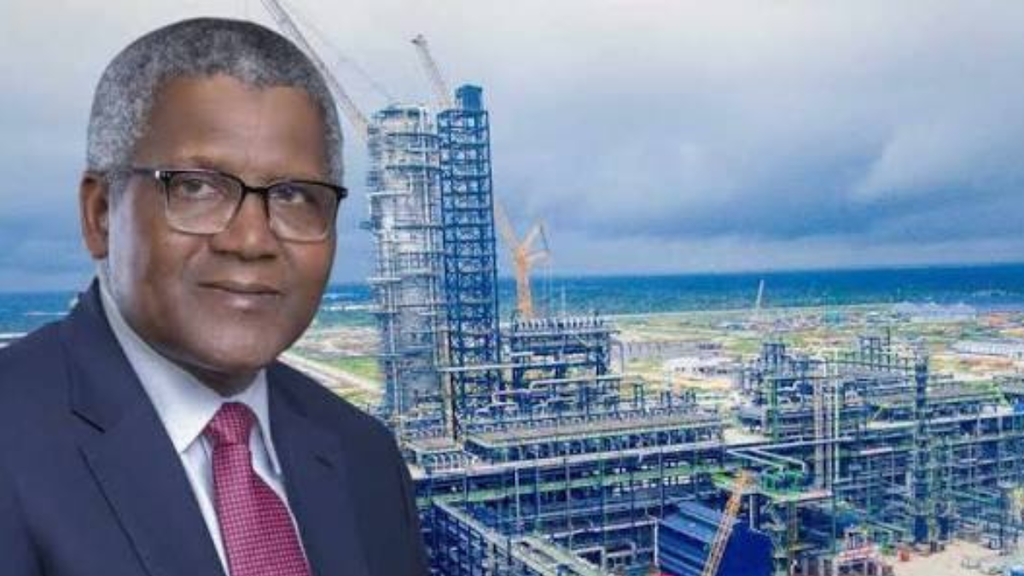
Dangote Petroleum Refinery and Petrochemicals has extended its N2.15 trillion initial public offering (IPO) by two weeks to October 27, 2026, following reported subscriptions several times above its original fundraising target. However, the extension points to a broader ambition beyond raising capital: expanding access to one of Africa’s largest industrial investments.
The Securities and Exchange Commission (SEC) approved the extension, moving the closing date from October 13. The offer comprises 4.1 billion ordinary shares priced at N525 each, with Chapel Hill Denham serving as financial adviser. The refinery aims to attract 10 million retail investors across Nigeria and other African markets.
Speaking on Monday, October 12, Aliko Dangote, president of Dangote Group, said the extension was intended to give more African investors an opportunity to participate rather than address a shortfall in fundraising.
According to Dangote, subscriptions had already exceeded the original fundraising target by more than three to four times. However, the company has not disclosed the exact amount subscribed or confirmed the final level of demand.
The distinction matters. While strong subscriptions indicate investor interest, the number of people who ultimately participate will determine how far the offer advances its goal of broadening ownership.
From Raising Capital to Expanding Ownership
An IPO typically provides a company with access to capital from public investors. Dangote Refinery’s offer carries an additional objective: bringing retail investors into the ownership of a major industrial asset.
The refinery is offering shares at N525 each, with a minimum subscription of 10 shares, equivalent to N5,250 before applicable charges. The offer therefore creates an entry point for individual investors who might otherwise have limited access to large-scale industrial investments.
Yet the ambition to attract 10 million investors introduces a different challenge from raising N2.15 trillion. Strong demand from existing investors does not automatically translate into broad participation across different income groups, countries, and investor categories.
The extension suggests that the refinery is prioritizing the breadth of participation alongside the amount of capital raised. For the company, a wider shareholder base could also provide a foundation for future engagement with retail investors as its operations and expansion plans evolve.
Cross-Border Access Is the Real Challenge
The refinery’s ambition to attract investors beyond Nigeria brings a longstanding weakness in Africa’s capital markets into focus: the difficulty of investing across national borders.
Although African economies are increasingly connected through trade and regional integration initiatives, their capital markets remain fragmented by differences in regulation, investor onboarding, settlement systems and access to investment platforms.
The Dangote IPO illustrates this challenge. Interest from investors in other African countries does not automatically give them a straightforward route to subscribe to a Nigerian share offer. Investors may still need access to approved intermediaries, complete identity verification, and satisfy the requirements of their respective jurisdictions.
To address these barriers, the refinery is pursuing arrangements to facilitate participation in other markets.
In Kenya, discussions with the Nairobi Securities Exchange have informed efforts to establish a route for investors to access the offer. A proposed global depositary receipt arrangement could allow eligible investors to gain exposure to the underlying Nigerian shares through instruments issued under an approved structure.
Uganda has also approved the marketing of the offer to domestic investors, while market institutions in other African countries are exploring mechanisms to facilitate participation.
These initiatives could expand the pool of potential investors, but their effectiveness will depend on the availability of approved channels, clear regulatory arrangements, and a process that investors can navigate without unnecessary complexity.
The broader implication is that attracting African investment into African businesses requires more than investor interest. It also requires capital market infrastructure that allows money to move across borders efficiently and transparently.
What the Extension Means for Nigeria’s Capital Market
For Nigeria, the IPO presents an opportunity to demonstrate that the domestic capital market can mobilise substantial local savings to finance industrial development.
Large infrastructure and industrial projects often depend on a combination of debt, private equity, and institutional financing. A successful public offer with broad retail participation could demonstrate another route: distributing ownership among a wider pool of investors while giving the company access to capital for future growth.
The proposed offer is also significant because of its scale. At N2.15 trillion, it represents a major test of the market’s capacity to absorb a large share issuance while accommodating investors with different financial resources and levels of investment experience.
However, subscription demand alone will not determine its wider impact. The eventual allocation of shares, the number of successful applicants, and the experience of investors after the offer closes will provide a clearer picture of whether the IPO has meaningfully expanded market participation.
For retail investors, the opportunity to own shares in a major refinery also comes with the usual risks of equity investment. The offer price does not guarantee future market performance, and investors need to assess the company’s financial position, valuation, growth plans, and risks before subscribing.
What Happens Next?
The two-week extension gives the refinery additional time to expand distribution channels and help prospective investors complete account opening, identity verification and other regulatory requirements.
David Bird, managing director and chief executive officer of Dangote Petroleum Refinery and Petrochemicals, said the company’s ambition from the outset had been to enable as many people as possible to participate in the offer and share in its future growth.
The immediate task is therefore to convert reported demand into completed subscriptions while making participation more accessible across the markets the company hopes to reach.
The outcome will matter beyond the refinery itself. If the offer succeeds in combining substantial capital mobilisation with broad retail ownership, it could provide a reference point for other African companies seeking to raise capital from investors across the continent.
For now, the extension shifts attention from how much money the refinery can raise to how effectively it can distribute access to the investment opportunity. That distinction could prove central to the IPO’s significance for Nigeria’s capital market and Africa’s wider investment landscape.