

TVS Motor Company is positioning itself for a broader share of Nigeria’s mobility market, moving beyond the HLX motorcycle that has helped establish its reputation among commercial riders.
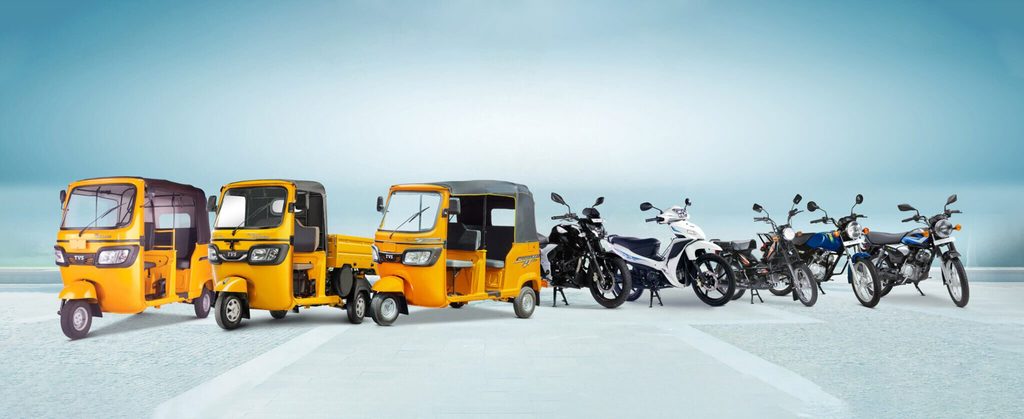
The Indian manufacturer is bringing attention to a wider portfolio spanning commuter motorcycles, performance bikes, scooters and three-wheelers, targeting customers ranging from everyday commuters to transport operators and small-business owners.
The strategy reflects a wider opportunity in Nigeria, where motorcycles and tricycles remain important for personal transportation, passenger services and goods delivery.
A Global Manufacturing Business
TVS recorded 5.9 million two- and three-wheeler sales in the 2025–26 financial year, representing 24% growth, according to the company’s figures.
Operating across 90 countries, the manufacturer has built a portfolio designed for different transportation needs, supported by manufacturing facilities in India and Indonesia.
Its product strategy goes beyond offering different vehicle models. Commuter motorcycles prioritise everyday usability, performance bikes target enthusiasts, while passenger and cargo three-wheelers serve commercial transportation needs.
For TVS, this range creates opportunities to reach customers with different budgets, preferences and business requirements without relying on a single product category.
Beyond the HLX: Different Vehicles for Different Needs
The HLX remains a key part of TVS’s Nigerian identity. Since its African launch in 2013, the motorcycle series has recorded more than five million cumulative global sales as of June 2026, with availability across more than 57 countries.
Its appeal has been built around durability, dependable performance and maintenance considerations that matter to commercial riders.
However, the company’s Nigerian line-up extends beyond the HLX 125 and HLX Plus. Other models include the Rockz, NEO NX, Neo AMI and Apache RTR 200 4V, alongside the TVS King range of passenger and cargo three-wheelers.
The variety gives the brand a route into different segments of the market. While commercial operators may prioritise reliability and operating costs, private riders may be more interested in comfort, design or performance.
The Apache range, in particular, offers TVS an opportunity to appeal to motorcycle enthusiasts, while the King range serves passenger transport and small-business logistics.
After-Sales Support Becomes Part of the Value Proposition
For vehicle buyers, the purchase price is only one part of ownership. Access to spare parts, qualified technicians and reliable servicing can influence how much a vehicle costs to operate over time.
TVS is therefore extending its Nigerian proposition through dealer and service networks, warranty information, manuals, maintenance resources and access to genuine parts.
The company’s local operations have received support from Wandel International and the Simba Group. In June 2026, TVS also appointed Enviable Tricycle Auto Parts Ltd as an additional authorised distributor, with plans to strengthen distribution, assembly and after-sales services in key markets.
For commercial riders whose income depends on keeping a vehicle on the road, reduced downtime can be just as important as the vehicle’s initial performance.
Electric Mobility and the Road Ahead
TVS’s international portfolio also includes electric scooters and other electric mobility products, reflecting its broader investment in changing transportation technologies.
However, the company’s current Nigerian line-up remains centred on the models offered locally. Any expansion of electric mobility in Nigeria will depend not only on vehicle availability but also on factors such as affordability, charging or battery infrastructure, parts availability and servicing capacity.
That distinction is important in a market where customers need technology that works within their daily transportation and business realities.
What This Means for Nigeria’s Mobility Market
TVS’s broader strategy highlights an important shift in how mobility brands can compete in Nigeria. A recognisable motorcycle may establish a foothold, but long-term growth can depend on reaching more customer segments and supporting vehicles throughout their ownership journey.
For commuters, that means more options. For transport operators and small businesses, it means access to different vehicle types and a service network that can support daily operations.
The opportunity for TVS is to turn its global manufacturing scale and diverse product range into lasting value for Nigerian customers.
The HLX may have introduced many Nigerians to TVS, but the company’s next growth opportunity could lie in how effectively it serves the country’s wider transportation needs.