


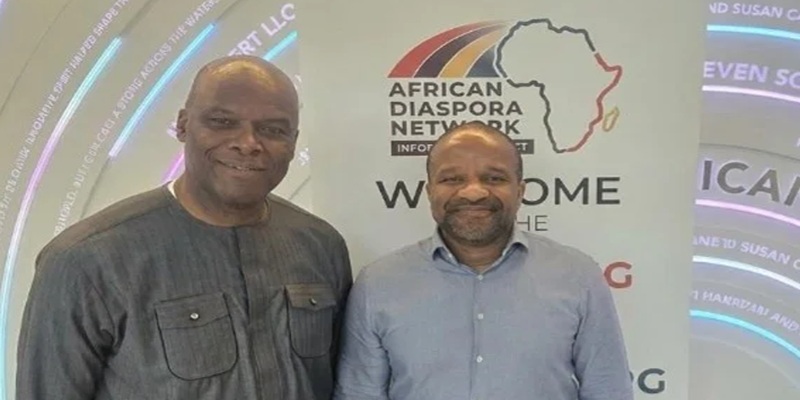
InnoPower Africa and Luma Learn AI have launched a continent-wide initiative to deliver free artificial intelligence education to one million Africans, leveraging mobile-first tools to reach underserved communities.
The programme is designed to democratize access to AI skills by delivering training through widely used platforms such as WhatsApp—eliminating the need for expensive devices or high-bandwidth internet. It targets students, educators, families, and small businesses often excluded from traditional edtech systems.
According to Chris Folayan, the platform has already supported over 160,000 learners, delivering more than 4.8 million learning sessions in 11 languages. The partnership with InnoPower is expected to accelerate that reach significantly, particularly across underserved regions.
The initiative comes amid rising urgency around AI adoption in Africa. While the continent’s AI market is projected to reach between $16 billion and $18 billion by 2030, structural barriers persist—most notably, limited internet access, with roughly 40% of Africans still offline.
For Emil Ekiyor, the challenge is not a lack of engagement but a lack of structured access. He argues that Africans are already active users of AI tools, but require better training, infrastructure, and coordinated programmes to fully participate in the global digital economy.
The rollout will follow a train-the-trainer model, equipping professionals to cascade knowledge within their communities. In partnership with the ECOWAS Small Business Coalition, the programme plans to train 250 lead facilitators who will, in turn, support 12,500 small businesses. Collaboration with the Lagos State Employment Trust Fund will further extend reach to entrepreneurs, with 100 trainers expected to impact 5,000 businesses.
Beyond skills development, the initiative reflects a broader shift toward mobile-first learning in Africa, where accessibility, rather than sophistication, often determines adoption. By embedding AI education into everyday platforms, the programme aims to lower barriers and integrate learning into daily life.
To scale, the partners are seeking an initial $250,000 to expand across the ECOWAS subregion, recruit facilitators, and deepen access to AI tools.
In a global landscape where Africa accounts for just a fraction of AI funding, initiatives like this highlight a critical reality: the continent’s competitiveness in the AI era will depend not only on capital flows, but on how quickly and inclusively it can build human capacity at scale.